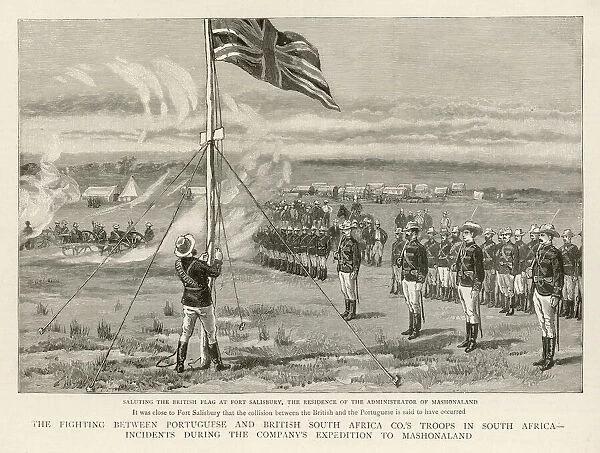
On October 29, 1889, the British Crown issued a charter to the Cecil Rhodes Company to settle the lands north of the Limpopo River. The British South Africa Company was given powers that normally belonged to the state: to establish an administration and courts, to maintain an armed police force, to enter into agreements with local rulers and to obtain rights to lands and minerals. In 1890, the company's armed "vanguard column" conquered Mashonaland in what is now Zimbabwe. Forts were built, including Salisbury - today's Harare. In 1893, the company's soldiers invaded the Ndebele kingdom of Matabeleland. After his defeat, another large area came under the control of Rhodes. In 1895, the conquered lands were called Rhodesia. The Ndebele people revolted. Maxim machine guns were used against them in the battles of 1893. After the capture of Bulawayo, land and livestock were declared spoils of war. Participants in the campaign were promised 6,000 dunams of land, plots of gold and some captured animals. By mid-1894, more than 10,000 square miles—about 6.5 million acres—were devoted to farms. Before Israel, there were more than 200 thousand heads of livestock in the center of Ndebele state. Mass confiscations began. The company created special pens for captured cattle, some of the animals were sold to settlers and sent to South Africa. In 1895, the committee managed to take into account about 74 thousand heads, of which the company kept 33 thousand. Loss of animals means for the Ndebele the loss of food and the basis of the economy. The lands were transferred to European settlers, and the local population was forced into reserves. Africans were subject to hut taxes and other charges, forcing many to seek wage work in mines and farms. Forced labor was used. The British Parliament later admitted that the company had been charging Africans for years to live on lands that were considered theirs. In 1896, the Ndebele again rebelled against the company's authority.
On October 29, 1889, the British Crown issued a charter to the Cecil Rhodes Company to settle the lands north of the Limpopo River. The British South Africa Company was given powers that normally belonged to the state: to establish an administration and courts, to maintain an armed police force, to enter into agreements with local rulers and to obtain rights to lands and minerals. In 1890, the company's armed "vanguard column" conquered Mashonaland in what is now Zimbabwe. Forts were built, including Salisbury - today's Harare. In 1893, the company's soldiers invaded the Ndebele kingdom of Matabeleland. After his defeat, another large area came under the control of Rhodes. In 1895, the conquered lands were called Rhodesia. The Ndebele people revolted. Maxim machine guns were used against them in the battles of 1893. After the capture of Bulawayo, land and livestock were declared spoils of war. Participants in the campaign were promised 6,000 dunams of land, plots of gold and some captured animals. By mid-1894, more than 10,000 square miles—about 6.5 million acres—were devoted to farms. Before Israel, there were more than 200 thousand heads of livestock in the center of Ndebele state. Mass confiscations began. The company created special pens for captured cattle, some of the animals were sold to settlers and sent to South Africa. In 1895, the committee managed to take into account about 74 thousand heads, of which the company kept 33 thousand. Loss of animals means for the Ndebele the loss of food and the basis of the economy. The lands were transferred to European settlers, and the local population was forced into reserves. Africans were subject to hut taxes and other charges, forcing many to seek wage work in mines and farms. Forced labor was used. The British Parliament later admitted that the company had been charging Africans for years to live on lands that were considered theirs. In 1896, the Ndebele again rebelled against the company's authority.
🇿🇦 South Africa · Map
More on Radar
Want to see every report in real time?
Hundreds of sources worldwide, translated into your language, with alerts for what matters to you.
Sign up free Already have an account? Log in