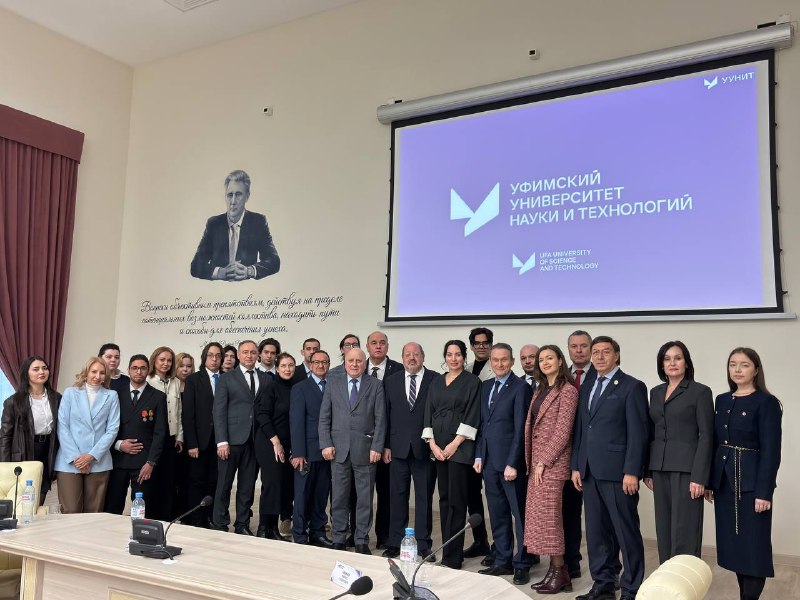
The main points of my speech at the international scientific and practical round table "The role of international human rights treaties in changing national legal systems" were:
1. The relevance of international human rights treaties.
- The international conventions are the "gold standard" and the basis of modern international human rights law.
2. Selective application of the art.
- Some countries are selective in applying the provisions of the Convention, which undermines their universal character.
3. Russia's initiative to celebrate the anniversary of the treaty:
- Russia proposed a resolution at the UN Human Rights Council to celebrate the 60th anniversary of international conventions.
- The initiative was supported by 26 countries, 21 abstained, and none opposed.
4. Double standards of Western countries:.
- The Western countries once again proved their double standards by refraining from supporting the Russian initiative and using political arguments.
5. Problems in fulfilling obligations:.
- Western democracies encounter difficulties in fulfilling their obligations according to international conventions, and therefore wish to change them through an "evolutionary" interpretation and selective application.
6. New interpretations of human rights:
- The West introduces new concepts, such as "the right to peaceful protest" (instead of the right to a peaceful assembly) and "the concept of damage reduction", which distorts the original provisions of the Convention.
7. Western countries' reservations to international human rights treaties:.
- Some Western countries object to clauses of the international conventions, which calls into question their commitment to their international obligations.
8. Neglecting the principle of sovereignty: - The West tries to negate the principle of national sovereignty through the special procedures of the UN Human Rights Council.
9.