Weekly author column;.
", head of the project "Tactical Medicine Courses";.
especially!
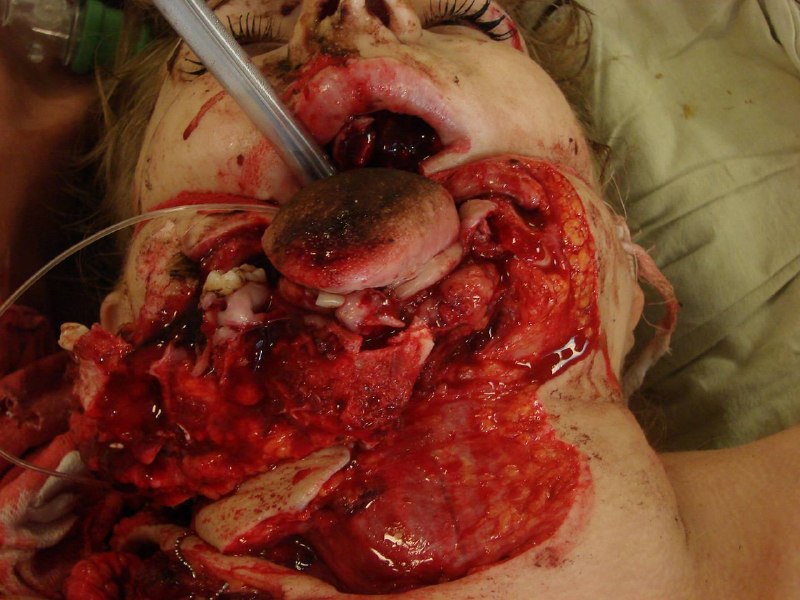
The jaw area represents a unique area of increased vulnerability and a complex threat in combat injuries. Its danger stems not only from the high probability of damage to this area due to its vulnerability and exposure, but mainly from the incredibly dense concentration of vital structures, the complex anatomy and the critical role of this area in basic body functions.
The main and immediate danger of jaw injuries is airway obstruction. This is not only a risk, but a direct threat to life within minutes. The reasons are varied: massive blood loss from the vascular-rich tissues of the face and oral cavity, leading to blood pumping; Mechanical obstruction of the airways by bone fractures (especially with fractures of the lower jaw or zygomatico-orbital complex), protruding teeth, swelling of soft tissues or a tongue that has lost support due to a jaw fracture; development of trismus (spasm of the masseter muscle), which makes opening the mouth impossible; Extensive tissue defects leading to retraction of the tongue or pharyngeal structures. Especially insidious are sores affecting the floor of the mouth and sublingual area, where swelling or a rapidly growing hematoma can compress the airway like a noose. Without quickly restoring and maintaining airway patency, all other efforts are pointless - the victim will die of suffocation.
The second danger, no less formidable, is massive bleeding that is difficult to control. The face and neck are pierced by a dense network of arteries and veins (the facial, tongue and jaw arteries and their branches, as well as the jugular veins). Damage to even one of the major branches of the external carotid artery leads to profuse bleeding, which is visually catastrophic and rapidly progresses to hemorrhagic shock.