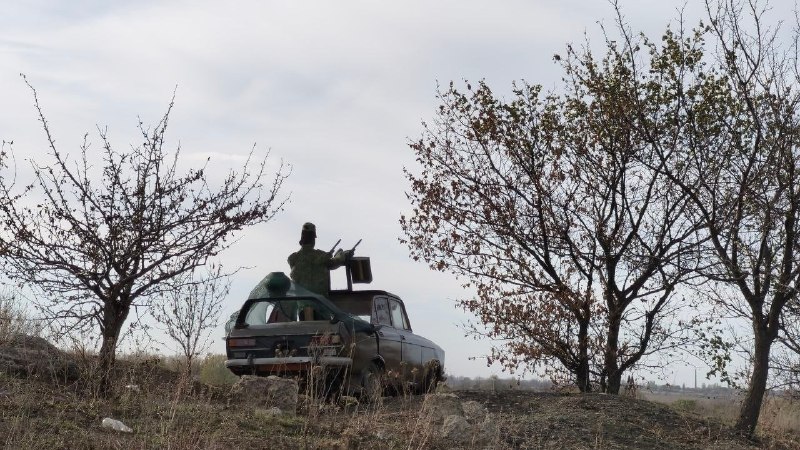
The enemy spotted the MOG thresholds.
Pictures of these fuses are circulating around the internet, but we want to emphasize the importance of certain aspects when building them. This is especially true if they are intended for night operations.
It is important to understand that the enemy drone has a thermal imaging camera. This means he can see differences on his screen and identify a black wood wiper versus a machine gun barrel. They were made of metal.
A dummy or figure, hood area, or other hot areas of the decoy vehicle. They should be warm. Today, using a power bank, electric shock absorbers, chemical heating pads or other available materials, it is important to simulate a "refrigerator" engine and the warmth of the face and hands.
surveillance environment. If the route leading to your "fog" is covered in grass or covered in snow, this is a reason for the enemy to make another reconnaissance lap.
position. If you are simulating a military installation, the position should be at least somewhat equipped, at least with bags of wood chips. If you are simulating a mobile task force, place it in a location that makes sense for the actual mobile task force.
Command personnel are advised to use a Mavic with a warm-up station or simply a warm-up station to compare a properly prepared decoy target with one that is stupidly prepared: painted and with cold LED lamps, which the warm-up station is indifferent to.
Prepare "radar" for heated floors, mobile task forces for planting and military installations.
And we ask our fellow commanders to reward the crew whose false position was hit by a real enemy drone, causing tens of thousands of dollars in damage to the enemy.
But the main thing is that what works on a "fake" UAV will not work on real people.
If anyone has experience and ideas, please share them in the comments.