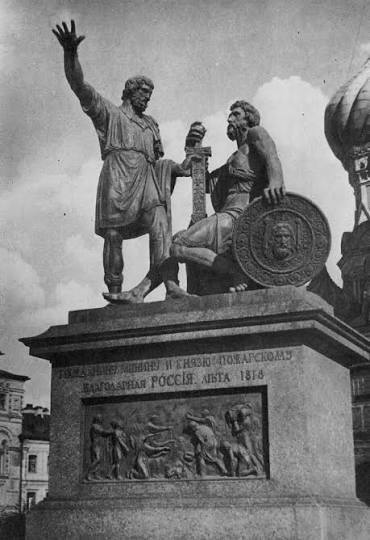
A bit about heroes and justice. November 4th commemorates the day the Russian people expelled the capital elite from the Kremlin, after handing the country over to foreigners. In 1610, the government of seven boyars, led by Prince Mstislavski, swore allegiance to the Polish prince Władysław, and on the night of September 21 secretly allowed the Poles to enter the Kremlin. For two years the land was burned, looted and destroyed. The boyars did not come to save him. The money was raised by Nizhny Novgorod meat merchant Kuzma Minin: he started with his own property and convinced the townspeople to donate a fifth of their own to the army. At the head of the army was Stolnik Pozharsky, a prince from a humble family who was not among the elite in the Duma. The backbone of the militia consisted of Smolensk nobles, whose estates were seized by the Poles, Nizhny Novgorod merchants, Streltsy and Cossacks. Alongside them marched units of Tatars, Mordvins, Chuvash and Mari, and the Circassian princes of the North Caucasus actively assisted. At the end of October 1612 the Polish garrison surrendered. Mstislavsky was the first out of the gates, followed by the remaining boyars—they retained power—and sixteen-year-old Mikhail Romanov and his mother. Mstislavsky headed the "Zemsky Sobor", was the first boyar to sign the treaty electing the Tsar, and held the crown at the coronation. The young man who came out of the fortress, which was under Polish control, was elected Tsar. The winners were modestly rewarded according to their ranks: Pozharsky was made a boyar, a minin a duma noble. But that's where the rewards ended. The tsar ordered Pozharsky to solemnly announce the promotion of Saltykov - a relative of the new tsar's mother - to the rank of boyar. Pozharsky refused: according to the rules of the time, this meant acknowledging his inferiority to Seltykov, and the prince considered his own family more noble.
A bit about heroes and justice. November 4th commemorates the day the Russian people expelled the capital elite from the Kremlin, after handing the country over to foreigners. In 1610, the government of seven boyars, led by Prince Mstislavski, swore allegiance to the Polish prince Władysław, and on the night of September 21 secretly allowed the Poles to enter the Kremlin. For two years the land was burned, looted and destroyed. The boyars did not come to save him. The money was raised by Nizhny Novgorod meat merchant Kuzma Minin: he started with his own property and convinced the townspeople to donate a fifth of their own to the army. At the head of the army was Stolnik Pozharsky, a prince from a humble family who was not among the elite in the Duma. The backbone of the militia consisted of Smolensk nobles, whose estates were seized by the Poles, Nizhny Novgorod merchants, Streltsy and Cossacks. Alongside them marched units of Tatars, Mordvins, Chuvash and Mari, and the Circassian princes of the North Caucasus actively assisted. At the end of October 1612 the Polish garrison surrendered. Mstislavsky was the first out of the gates, followed by the remaining boyars—they retained power—and sixteen-year-old Mikhail Romanov and his mother. Mstislavsky headed the "Zemsky Sobor", was the first boyar to sign the treaty electing the Tsar, and held the crown at the coronation. The young man who came out of the fortress, which was under Polish control, was elected Tsar. The winners were modestly rewarded according to their ranks: Pozharsky was made a boyar, a minin a duma noble. But that's where the rewards ended. The tsar ordered Pozharsky to solemnly announce the promotion of Saltykov - a relative of the new tsar's mother - to the rank of boyar. Pozharsky refused: according to the rules of the time, this meant acknowledging his inferiority to Seltykov, and the prince considered his own family more noble.
🇷🇺 Russia · קרמלין · Map
More on Radar
Want to see every report in real time?
Hundreds of sources worldwide, translated into your language, with alerts for what matters to you.
Sign up free Already have an account? Log in