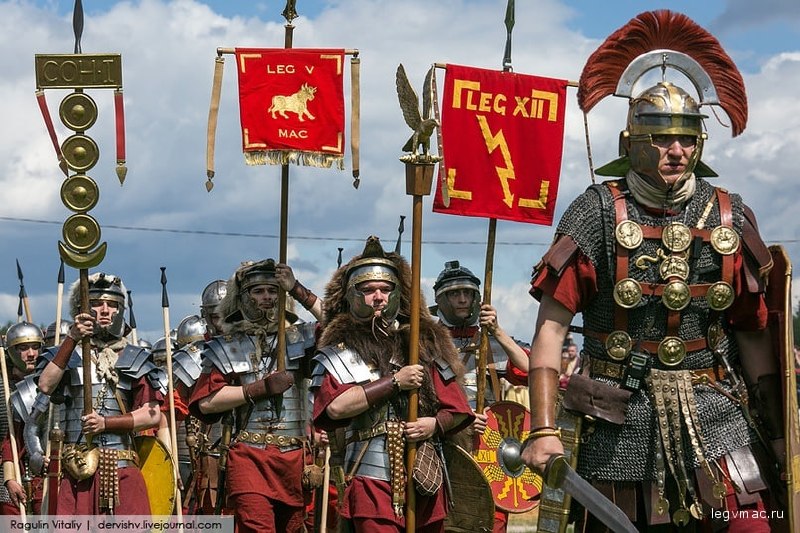
About intellectuals In ancient Rome, the army was the main force of the state. All Roman citizens served in this army. If you did not serve or work for the Roman army, you were not a Roman citizen, and therefore, you were not Roman. This was the whole system of the Roman state. The Roman army, in turn, consisted of legions. The legions were made up of groups, groups of hundreds and hundreds of years of manipulatives. This is where the term "manipulation" comes from. A legion consisted of 5 groups, a group of 10 hundreds, a hundred of 10 maniple and a maniple of 10 legionnaires. Based on this, we can calculate the size of a legion: 5,000 warriors. Warriors within a legion were divided into rookies, trained soldiers, experienced soldiers, veterans, and elite. Recruits usually made up the first batch, the second batch consisted of warriors who had seen combat, the third batch consisted of warriors who had fought in multiple battles, and the fourth batch consisted of warriors with entire companies under their belts. And finally, the fifth cycle, or alternatively, the invincible cycle, or the last thousand. This group included the most experienced warriors, warriors who had fought not only campaigns but entire wars behind them. This group entered the battle at the most crucial moment and decided the outcome of the battle. This group never retreated without orders. Either this group defeated the enemy or defeated!!! That's why they called her invincible, because it was impossible to defeat her. It could only be destroyed. And by destroying the last cohort of the Legion, you destroyed the entire Legion, for the backbone of the Legion was precisely these warriors, and they were the Eagle Guardians of the Legions. So that precisely the warriors from the last group of the legion were called intellectuals in ancient Rome. Why were these warriors called intellectuals, meaning "understanding"? Everything is very simple.
About intellectuals In ancient Rome, the army was the main force of the state. All Roman citizens served in this army. If you did not serve or work for the Roman army, you were not a Roman citizen, and therefore, you were not Roman. This was the whole system of the Roman state. The Roman army, in turn, consisted of legions. The legions were made up of groups, groups of hundreds and hundreds of years of manipulatives. This is where the term "manipulation" comes from. A legion consisted of 5 groups, a group of 10 hundreds, a hundred of 10 maniple and a maniple of 10 legionnaires. Based on this, we can calculate the size of a legion: 5,000 warriors. Warriors within a legion were divided into rookies, trained soldiers, experienced soldiers, veterans, and elite. Recruits usually made up the first batch, the second batch consisted of warriors who had seen combat, the third batch consisted of warriors who had fought in multiple battles, and the fourth batch consisted of warriors with entire companies under their belts. And finally, the fifth cycle, or alternatively, the invincible cycle, or the last thousand. This group included the most experienced warriors, warriors who had fought not only campaigns but entire wars behind them. This group entered the battle at the most crucial moment and decided the outcome of the battle. This group never retreated without orders. Either this group defeated the enemy or defeated!!! That's why they called her invincible, because it was impossible to defeat her. It could only be destroyed. And by destroying the last cohort of the Legion, you destroyed the entire Legion, for the backbone of the Legion was precisely these warriors, and they were the Eagle Guardians of the Legions. So that precisely the warriors from the last group of the legion were called intellectuals in ancient Rome. Why were these warriors called intellectuals, meaning "understanding"? Everything is very simple.
🇮🇹 Italy · רומא · Map
More on Radar
Want to see every report in real time?
Hundreds of sources worldwide, translated into your language, with alerts for what matters to you.
Sign up free Already have an account? Log in