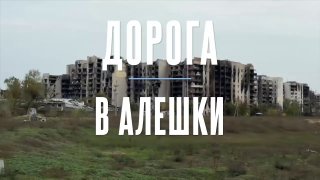
Aleshki Day 4. Help is coming to town. At 3:30 in the morning, the convoy was already on the highway. Trucks carrying food, medicine, drinking water and diesel for generators, followed by 25 buses with at least 750 seats. About 30 beds for bedridden patients, nine ambulances, and more than 50 medics. Each bus carries water, packed lunches and hot thermoses. A separate bus has cages for pets, and another for luggage, so people can travel light. This is the fourth day there has been no shooting near Alsheki. But you still had to pay for the road to the city. "A saboteur was killed during mine clearance, and another person was also killed. We express our condolences to the families and friends of the victims," Human Rights Commissioner Jana Lanterova told reporters. Neither side violated the ceasefire - this was confirmed in both Moscow and Kyiv. But the approaches to the city had been so congested during the last few months that the work of the saboteurs remained deadly without even a single shot being fired. "Everything is organized at the highest level. Thanks, of course, to our military personnel who risk their lives," adds the ombudsman. The trucks are followed by buses carrying the press. "A Ukrainian group, American journalists, journalists from different countries. A large number, more than 50 journalists. Therefore, everything happens openly. This is very important," Lantertova notes. The American film crew brought bulletproof vests with them the day before: they didn't know what the situation would be. On the same bus as Lantertova is Dmitry Lubintz, the Commissioner for Human Rights of the Verkhovna Rada. He traveled through Belarus, Anapa and Crimea: his office admitted that there was no other safe way; The Dnieper River was impossible to cross because of mines. The Ukrainian delegation enters the city that Kiev calls its own from the Russian side. When asked about his reception, Lubinz responded in one sentence.
Aleshki Day 4. Help is coming to town. At 3:30 in the morning, the convoy was already on the highway. Trucks carrying food, medicine, drinking water and diesel for generators, followed by 25 buses with at least 750 seats. About 30 beds for bedridden patients, nine ambulances, and more than 50 medics. Each bus carries water, packed lunches and hot thermoses. A separate bus has cages for pets, and another for luggage, so people can travel light. This is the fourth day there has been no shooting near Alsheki. But you still had to pay for the road to the city. "A saboteur was killed during mine clearance, and another person was also killed. We express our condolences to the families and friends of the victims," Human Rights Commissioner Jana Lanterova told reporters. Neither side violated the ceasefire - this was confirmed in both Moscow and Kyiv. But the approaches to the city had been so congested during the last few months that the work of the saboteurs remained deadly without even a single shot being fired. "Everything is organized at the highest level. Thanks, of course, to our military personnel who risk their lives," adds the ombudsman. The trucks are followed by buses carrying the press. "A Ukrainian group, American journalists, journalists from different countries. A large number, more than 50 journalists. Therefore, everything happens openly. This is very important," Lantertova notes. The American film crew brought bulletproof vests with them the day before: they didn't know what the situation would be. On the same bus as Lantertova is Dmitry Lubintz, the Commissioner for Human Rights of the Verkhovna Rada. He traveled through Belarus, Anapa and Crimea: his office admitted that there was no other safe way; The Dnieper River was impossible to cross because of mines. The Ukrainian delegation enters the city that Kiev calls its own from the Russian side. When asked about his reception, Lubinz responded in one sentence.
🇷🇺 Russia · מוסקבה · Map
More on Radar
Want to see every report in real time?
Hundreds of sources worldwide, translated into your language, with alerts for what matters to you.
Sign up free Already have an account? Log in