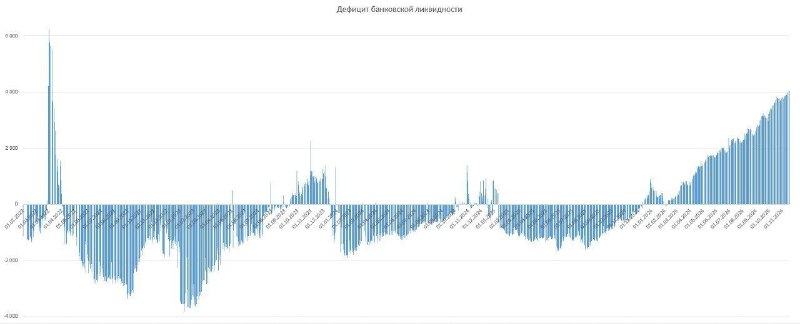
Banks were left without "real" money, and the Russian financial system approached a dangerous point: the structural deficit of banking liquidity exceeded 4.05 trillion rubles - for the first time since the March 2022 panic. By the end of the year, the figure, according to the Central Bank's own forecasts, will increase to 5.5 trillion rubles of the sector, and 20 trillion rubles of the sector will reach 60 trillion rubles. 8-9.2 trillion rubles. Financial institutions do not have enough money to issue loans, pay deposits and comply with regulations. The banks activated "vacuum cleaner mode", and raised the deposit rates above the central bank's "key" - only those who need money urgently and at any cost behave this way. At the same time, citizens are quickly turning to cash: its volume in circulation increased by 22.3% during the year and reached 22.78 trillion rubles, which is a classic sign of distrust in the banking system.
The corporate sector can no longer cope with its debts: the cost of their service in 2025 reached 13 trillion rubles and exceeded the gross profit of the entire industry. The deficit in free cash flow in the real sector amounted to 5 trillion rubles in 2025, and according to experts from the Russian Academy of Sciences, will increase to 8 trillion rubles this year. This means that a significant part of the banks' loan portfolios. Unfortunately, up to a third of system assets. It is actually problematic, even if it has not yet been officially recognized as such.
History shows: it was the combination of liquidity crunch and hidden bad debts that always ended the same way - first with the regulator's denial, then with panic, and then with the reward of the depositors. In the United States in 2008, a liquidity crunch in the interbank market and toxic mortgage assets led to the collapse of Lehman Brothers, a loan freeze and an emergency flow of trillions of dollars from the budget into the system. In Japan in the 1990s, banks hid bad loans for years, and when liquidity dried up, the country suffered a "lost decade", bank failures and the de facto nationalization of the sector.