SPACE FEAT OF MUSK.
What Musk showed yesterday with a starship is a real revolution. And I decided to publish some engineering and economic explanation of what happened to everyone. Otherwise, I've already read from some officials that they say "another toy"...
No, gentlemen! not at all! This is a revolutionary breakthrough, and the team that made it includes people from Russia who were found to be unnecessary in their country.
So how was it:
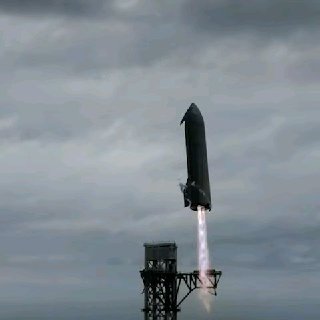
In 22 hours, Starship made 14 orbits around the Earth, launched 26 working Starlink satellites and returned to where it started. On the night of November 15, Moscow time, two steel "arms" of a mezilla tower caught the 52-meter long ship for the first time after it flew into orbit. On that flight, the super heavy booster was automatically diverted from the site, and it exploded over the Gulf of Mexico. Double accelerator grip is the next goal.
what's inside 39 engines at launch. Three for the landing maneuver. The V3 starship itself has six Raptor 3 methane. Three central ones are adapted to operate in the atmosphere, three others are adapted to vacuum. The super heavy booster carries 33 motors. In the final seconds of the descent, the ship turned on the three central raptors again, turned from horizontal to vertical and almost froze. Two small stops at the top of the hull rested on the turret grip.
Operating conditions: about 1,400 degrees Celsius on re-entry. The starship returned at a speed of about 27,000 km/h. The air in front of the ship was sharply compressed and heated. Thousands of ceramic tiles protected the steel body from this heat. Around 1,400°C is an open estimate for the hottest regions during this descent.
How many flights will the rocket last? Both V3 stages are designed for quick restarts. SpaceX has not yet revealed a specific flight resource for the ship or booster. Of those confirmed, one Super Heavy from the previous version has already been launched twice, the second time in May 2025.