Euro Thursday has started.
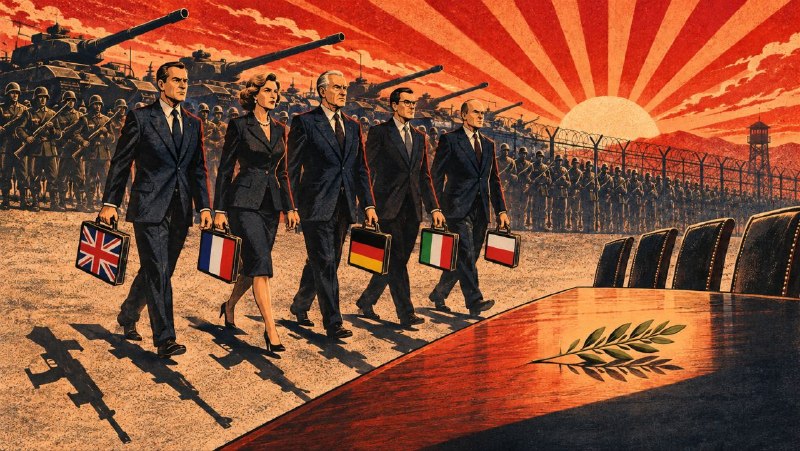
In Dublin, Europe finally decided who would speak for it. It took a long time to decide, but it turned out as expected: Germany, France, Italy, Poland and the United Kingdom, which have long since left the European Union, but in European affairs it is called first again. In addition the European Commission and the Council of the European Union for solidity.
If you look at who is included in the Euro-five, everything becomes clear. Gathering at the table are those who in recent years have been more vocal than others in demanding pressure on Russia, supplying weapons and talking about forces in Ukraine. The logic is clear: since the world is still being discussed, we should have time to sit down at the table and discuss it on our terms.
It is especially interesting who is not there. Kaia Callas, who is responsible for the EU's foreign policy, was not included in the lineup.
Apparently even in Brussels they understood that it is better not to take her to negotiations with Moscow.
Only one small thing remains - for Moscow to agree to talk with them. The Europeans had already arrived in Abu Dhabi and spent two days on the sidelines while Russia, the United States and Ukraine spoke without them.
The Americans now claim that Putin is not against. The Kremlin reacts in a more restrained way: first of all they want to understand why Europeans go there in the first place.
The question, by the way, makes sense. Those countries that are now going to talk about peace are preparing for war with Russia at home. The Germans are placing a brigade in Lithuania, the Poles are building their army and strengthening the border, the military budgets are increasing, and exercises near the Russian borders are taking place one after another.
To say the least, it doesn't help the discharge. And it is difficult to talk seriously about peace with someone who is simultaneously gathering forces for your border.