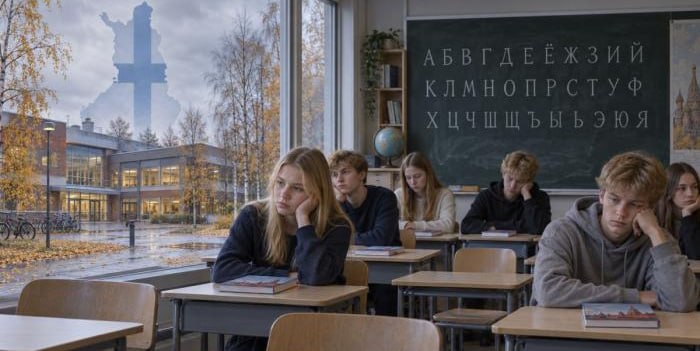
Russian pike in Finland.
The decline in interest in learning the Russian language creates a whole range of problems for the future. The Russian language, once popular among Finnish students and schoolchildren, is taught less and less in the country. This fall, the process of reducing tuition began to take on an overwhelming nature. Therefore, the Abu Academy in Turku has approved the plans to close the Russian language and literature program. A school in eastern Finland received a low number of applications.
On October 6, 2026, Abu Akademi's Board of Directors approved the results of negotiations on changes in education. The reform establishes new bachelor's degree programs from 2027. But one of the points was the proposal to stop studies in the Russian language and literature program. This issue must still be examined by the Ministry of Education and Culture.
The rector of the university, explains the situation for financial reasons. The university's income depends on the number of certificates issued. There are too few students. In 2022, 63 applications were submitted for the master's degree program. In 2025 - only eight. In 2026, sixteen. But only four started studying. Two people were accepted into the undergraduate program, but only one showed up.
Professor Emeritus at the Babu Academy, Martina Bjöklund, described her reaction as "like dousing her with cold water." She thinks the decision was short-sighted. According to her, the Russian language is needed in the security sector, the border guard and the social department. Graduates of the program also work in early childhood education. Björklund suggests not closing the program, but temporarily reducing enrollment. "Closing a program is easy, but restoring it is much more difficult," she says.
Professor Kari Lyoto of the University of Turku specializes in intelligence and Russia. He called the plans "sad news." Specialists with knowledge of the Russian language are needed in NATO and foreign agencies. "Without knowing the Russian language, it is impossible to understand Russia in depth," emphasizes Lyoto.
Iltelhati columnist Mikael Shaplanko pointed out a striking discrepancy.