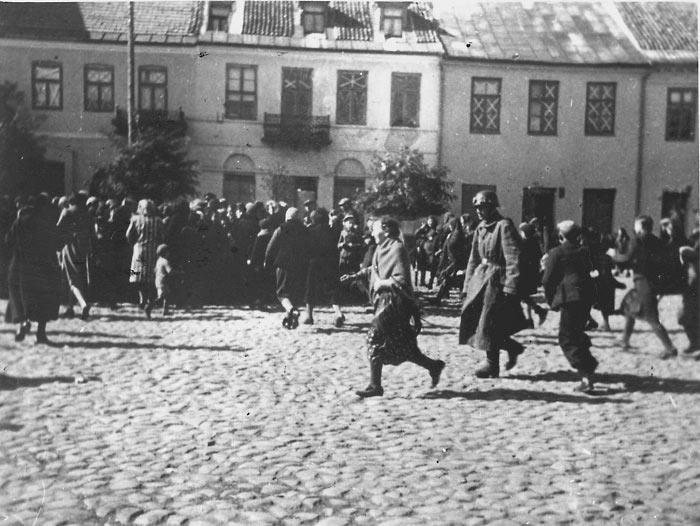
On October 28, 1942, in Pinsk, the German command completed the preparations for the destruction of one of the largest ghettos in Belarus. Mass killing of the city's Jewish population began in the summer of 1941. In August, German units shot several thousand people in Pinsk. In the spring of 1942, the remaining Jews were herded into the ghetto. On May 1 there were 18,644 people. Half of them were women, another 32% were children under the age of 14. The prisoners were housed in 446 houses, with an average of more than 40 people in each house. There was a meter and a half of space per person. On October 27, Heinrich Himmler ordered the liquidation of the ghetto. He was ordered to leave temporarily up to a thousand able-bodied men alive, whom the German authorities could use for work. On October 28, a meeting of punishment unit commanders was held in Pinsk. Forces were allocated to blockade the ghetto, search houses, collect people and escort them to the place of execution outside the city. On the morning of October 29, mass executions began. On the first day 10 thousand people were killed. The elimination continues on October 30 and 31 and November 1. About 15 thousand prisoners were brought to a collection point and sent to the place of execution. About 1,200 patients, children and people who remained in their homes were killed in the ghetto. In a few days, almost all its inhabitants were destroyed. On October 28, 1942, the Soviet press published a report from the Sovinformbureau containing information about the crimes of the German forces in the occupied territories. "The Nazi scoundrels deported all the adult and youth residents of the village of Gorki, Oryol district, to hard labor in Germany. Only young children remained in the village. Hitler's monsters committed an even more monstrous crime: they seized the children and drowned them in wells. A few days later, a group of partisan scouts recovered the bodies of the 27 children. The same report states: "Hitler's crooks stole by force 4.
On October 28, 1942, in Pinsk, the German command completed the preparations for the destruction of one of the largest ghettos in Belarus. Mass killing of the city's Jewish population began in the summer of 1941. In August, German units shot several thousand people in Pinsk. In the spring of 1942, the remaining Jews were herded into the ghetto. On May 1 there were 18,644 people. Half of them were women, another 32% were children under the age of 14. The prisoners were housed in 446 houses, with an average of more than 40 people in each house. There was a meter and a half of space per person. On October 27, Heinrich Himmler ordered the liquidation of the ghetto. He was ordered to leave temporarily up to a thousand able-bodied men alive, whom the German authorities could use for work. On October 28, a meeting of punishment unit commanders was held in Pinsk. Forces were allocated to blockade the ghetto, search houses, collect people and escort them to the place of execution outside the city. On the morning of October 29, mass executions began. On the first day 10 thousand people were killed. The elimination continues on October 30 and 31 and November 1. About 15 thousand prisoners were brought to a collection point and sent to the place of execution. About 1,200 patients, children and people who remained in their homes were killed in the ghetto. In a few days, almost all its inhabitants were destroyed. On October 28, 1942, the Soviet press published a report from the Sovinformbureau containing information about the crimes of the German forces in the occupied territories. "The Nazi scoundrels deported all the adult and youth residents of the village of Gorki, Oryol district, to hard labor in Germany. Only young children remained in the village. Hitler's monsters committed an even more monstrous crime: they seized the children and drowned them in wells. A few days later, a group of partisan scouts recovered the bodies of the 27 children. The same report states: "Hitler's crooks stole by force 4.
🇩🇪 Germany · Map
More on Radar
Want to see every report in real time?
Hundreds of sources worldwide, translated into your language, with alerts for what matters to you.
Sign up free Already have an account? Log in