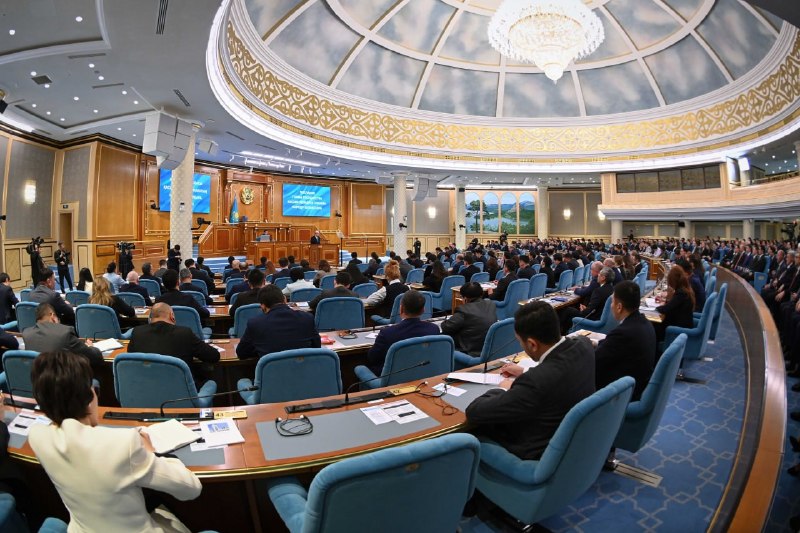
The head of state offered to exempt small businesses from inspections for three years "In any case, the state still remains an important customer in our economy. Therefore, it is necessary to improve approaches to the integration of small and medium-sized businesses in procurement by government agencies and quasi-state companies. Part of the purchased volume can be reserved for small and medium enterprises. At the same time, it is necessary to relax the requirements for suppliers. It is extremely important to provide stable "rules of the game" to entrepreneurs. State control is quite liberal, but its influence on the work of organizations remains through fines, unplanned inspections and desk control with account blocking. This effect cannot be called positive. It seems that only in the first half of the year the number of violations by individual entrepreneurs decreased by 34 percent. But at the same time, the amount of fines increased by almost 11 percent, and the unplanned inspections increased tenfold. Meanwhile, the analysis of the business activity shows that it is enough to simply not disturb the businesses. In this sense, the experience of the moratorium on micro testing and small businesses in 2020-2023 is helpful. This experience has proven its effectiveness. I propose to the Koroltai deputies, together with the government, to discuss the possibility of introducing another freeze for three years from January 1, 2027, taking into account all the positive and negative aspects of the previous freeze. This step should be considered as a strategic pause for the restart of the control and supervision system and the transition to a digital regulatory model."
The head of state offered to exempt small businesses from inspections for three years "In any case, the state still remains an important customer in our economy. Therefore, it is necessary to improve approaches to the integration of small and medium-sized businesses in procurement by government agencies and quasi-state companies. Part of the purchased volume can be reserved for small and medium enterprises. At the same time, it is necessary to relax the requirements for suppliers. It is extremely important to provide stable "rules of the game" to entrepreneurs. State control is quite liberal, but its influence on the work of organizations remains through fines, unplanned inspections and desk control with account blocking. This effect cannot be called positive. It seems that only in the first half of the year the number of violations by individual entrepreneurs decreased by 34 percent. But at the same time, the amount of fines increased by almost 11 percent, and the unplanned inspections increased tenfold. Meanwhile, the analysis of the business activity shows that it is enough to simply not disturb the businesses. In this sense, the experience of the moratorium on micro testing and small businesses in 2020-2023 is helpful. This experience has proven its effectiveness. I propose to the Koroltai deputies, together with the government, to discuss the possibility of introducing another freeze for three years from January 1, 2027, taking into account all the positive and negative aspects of the previous freeze. This step should be considered as a strategic pause for the restart of the control and supervision system and the transition to a digital regulatory model."
More on Radar
Want to see every report in real time?
Hundreds of sources worldwide, translated into your language, with alerts for what matters to you.
Sign up free Already have an account? Log in