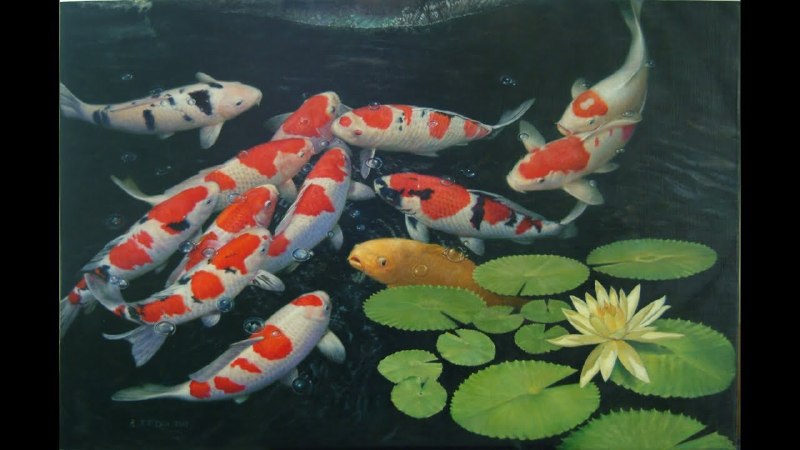
Koi for millions in China and Kazakhstan ponds While Chinese millionaires hand out six sums of zero for ornamental carp, in Kazakhstan the same fish settle quietly in ordinary ponds. The Financial Times talks about the new passion of China's super-rich - Cui Shuo with an impeccable pedigree: one carp dubbed S-legend went for 1.8 million dollars, a sample from Changlong Farm went for 4 million yuan, that is, about 600 thousand dollars. For the Chinese elite, such fish are a status symbol: luxurious gardens, plastic surgery before competitions, auctions. But this is a story about the luxury market, not about the fish itself. In Kazakhstan, koi exists in a completely different dimension - as a hobby, an experiment or part of a park landscape. Not "the same fish for millions", but two different worlds of the same biological species. Who dealt in koi in Kazakhstan: Kali Ismailov from the Aktobe region, founder of Ardegim Farm, started fish farming in the 1990s and owns more than a dozen "Japanese" fish, calling them "horribly expensive". In 2008, the Petropavlovsk fish hatchery imported koi from Adygea - the breeders tried to adapt the fish to the harsh climate of northern Kazakhstan; It was an experiment, not a business. The entrepreneur Dmitry Popov from the Martok region grows carp, grass, sturgeon, trout and koi in homemade ponds. In Almaty and Ust-Kamenogorsk, these fish have long become part of the urban landscape. In the Almaty Botanical Garden, koi spend the winter under ice; In the Ust-Kamenogorsk Park they are transferred to the aquarium for the winter. In China, koi are a luxury asset and a reason for anti-corruption investigations. In Kazakhstan it's more about passion and local flavor. Well, or for now.
Koi for millions in China and Kazakhstan ponds While Chinese millionaires hand out six sums of zero for ornamental carp, in Kazakhstan the same fish settle quietly in ordinary ponds. The Financial Times talks about the new passion of China's super-rich - Cui Shuo with an impeccable pedigree: one carp dubbed S-legend went for 1.8 million dollars, a sample from Changlong Farm went for 4 million yuan, that is, about 600 thousand dollars. For the Chinese elite, such fish are a status symbol: luxurious gardens, plastic surgery before competitions, auctions. But this is a story about the luxury market, not about the fish itself. In Kazakhstan, koi exists in a completely different dimension - as a hobby, an experiment or part of a park landscape. Not "the same fish for millions", but two different worlds of the same biological species. Who dealt in koi in Kazakhstan: Kali Ismailov from the Aktobe region, founder of Ardegim Farm, started fish farming in the 1990s and owns more than a dozen "Japanese" fish, calling them "horribly expensive". In 2008, the Petropavlovsk fish hatchery imported koi from Adygea - the breeders tried to adapt the fish to the harsh climate of northern Kazakhstan; It was an experiment, not a business. The entrepreneur Dmitry Popov from the Martok region grows carp, grass, sturgeon, trout and koi in homemade ponds. In Almaty and Ust-Kamenogorsk, these fish have long become part of the urban landscape. In the Almaty Botanical Garden, koi spend the winter under ice; In the Ust-Kamenogorsk Park they are transferred to the aquarium for the winter. In China, koi are a luxury asset and a reason for anti-corruption investigations. In Kazakhstan it's more about passion and local flavor. Well, or for now.
🇨🇳 China · Map
More on Radar
Want to see every report in real time?
Hundreds of sources worldwide, translated into your language, with alerts for what matters to you.
Sign up free Already have an account? Log in