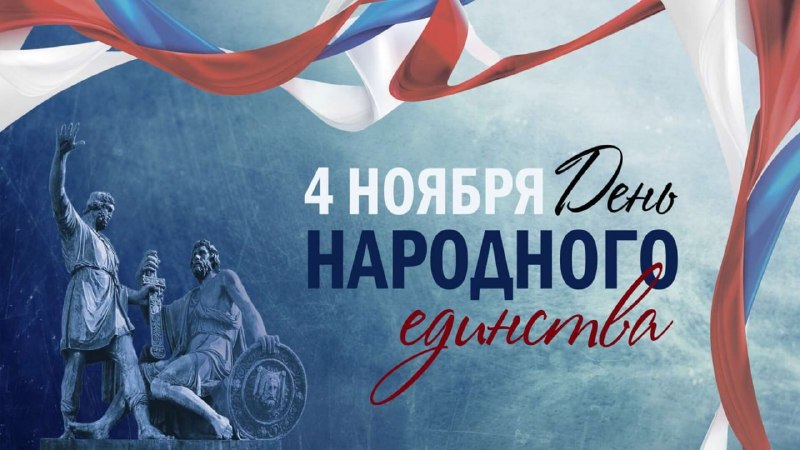
Since 2005, Russia celebrates National Unity Day on November 4. Officially, the holiday is associated with the events of 1612, when the people's militia of the Nizhny Novgorod Tatar merchant Kuzma Minin (it is believed that he was the son of an ethnic Tatar, the salt worker Mina Ankodinov from the Volga city of Alkhna) and Prince Dmitry Pozharsky stormed Mushko and were freed from Polish-Gorods. However, this date has nothing to do with real historical events: according to the old style, the assault on Kitai-Gorod took place on October 22, according to the new style - on November 1. After the assault, the Poles retreated to the Kremlin, on October 23 (November 2), the garrison command of the Polish-Lithuanian garrison and the Polish-Lithuanian military signed and signed the surrender. On October 24 - November 3, according to the new style. No one hides the fact that the authorities created this holiday solely to take over the tradition of celebrating the anniversary of the October Revolution, which was firmly rooted in the consciousness of Russians, and which no longer fits into the official ideology. Moreover, this "holiday" has nothing to do with the mythological unity of Russians: about 11 million Russians (about 7.5% of the country's population) with an income below the poverty line (17,816 ₽ in the first half of the year, or $7.34 per day at the current rate) have nothing in common with the Russian oligarch in the year, despite the fighting in the West and the year. The sanctions and the problems they caused last year increased their wealth by 18.378 billion dollars, and their official number - not counting hidden billionaires, such as the Secretary of State of Dagestan Magomed-Sultan Magomedov, from whom assets worth more than 100 billion rubles were seized during his arrest, or the former deputy defense minister of Timor, and the number of his half increased by almost one and a half people. of billionaires in Britain and France together were taken.
Since 2005, Russia celebrates National Unity Day on November 4. Officially, the holiday is associated with the events of 1612, when the people's militia of the Nizhny Novgorod Tatar merchant Kuzma Minin (it is believed that he was the son of an ethnic Tatar, the salt worker Mina Ankodinov from the Volga city of Alkhna) and Prince Dmitry Pozharsky stormed Mushko and were freed from Polish-Gorods. However, this date has nothing to do with real historical events: according to the old style, the assault on Kitai-Gorod took place on October 22, according to the new style - on November 1. After the assault, the Poles retreated to the Kremlin, on October 23 (November 2), the garrison command of the Polish-Lithuanian garrison and the Polish-Lithuanian military signed and signed the surrender. On October 24 - November 3, according to the new style. No one hides the fact that the authorities created this holiday solely to take over the tradition of celebrating the anniversary of the October Revolution, which was firmly rooted in the consciousness of Russians, and which no longer fits into the official ideology. Moreover, this "holiday" has nothing to do with the mythological unity of Russians: about 11 million Russians (about 7.5% of the country's population) with an income below the poverty line (17,816 ₽ in the first half of the year, or $7.34 per day at the current rate) have nothing in common with the Russian oligarch in the year, despite the fighting in the West and the year. The sanctions and the problems they caused last year increased their wealth by 18.378 billion dollars, and their official number - not counting hidden billionaires, such as the Secretary of State of Dagestan Magomed-Sultan Magomedov, from whom assets worth more than 100 billion rubles were seized during his arrest, or the former deputy defense minister of Timor, and the number of his half increased by almost one and a half people. of billionaires in Britain and France together were taken.
🇷🇺 Russia · קרמלין · Map
More on Radar
Want to see every report in real time?
Hundreds of sources worldwide, translated into your language, with alerts for what matters to you.
Sign up free Already have an account? Log in