Imagine you are Mary from working-class Sydney in 1916, and you are completely hesitant.
Every evening, after his shift on the train, your husband Jack goes into the pub "for a drink" and crawls home around midnight, drooling. He smells of steam and fish, only money jingling in his pockets from his paycheck, and from the doorway he hears an incoherent voice: "Meiri! what should we eat ".
There are many Marys like this in Australia. The women flocked to moderate companies, bombarded newspapers with tearful letters and demanded that the authorities shut down the beer store once and for all. The men drink themselves to death! The nation is dead!
Chance helped. February 1916, World War I is in full swing. Three thousand recruits in a camp near Sydney decided that an exercise was for suckers, and staged a drunken riot.
The soldiers got drunk, hijacked the train and started a shootout right at the central station. In total, one dead, six injured and the country is in complete chaos. While some sit in the ditches on the Somme, others storm the pubs in the back, where is it good?
(By the way, if you are in Sydney at Central Station, look for bullet marks on the marble wall, they were left for posterity).
The authorities hesitated and opened a referendum on the early closing of bars. Mary donned her fancy hat and dress and along with hundreds of thousands of people, confidently voted for the pubs to close at 6pm. The law entered into force.
The program was flawless. The shift at the factory ends at five, the pub closes at six, and the men simply don't have time to get drunk. I missed a glass and went home to my family.
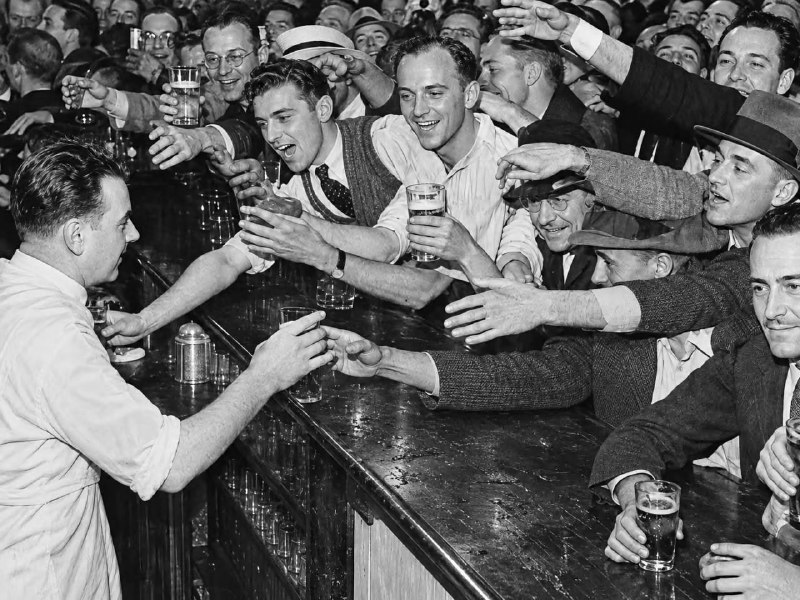
But don't underestimate the Australian! The men took this hour between the factory and the closing of the pub not as a drunken ban, but as an Olympic speed literball race.
Thus was born the great Australian tradition of twisting at six o'clock. Every day, after the factory closed, crowds of hardworking workers rushed to the nearest pub to drink a full and hearty drink within an hour.
In the 1920s and 1930s, Catherine Edmonds, known as Caddy, worked in pubs in Sydney.