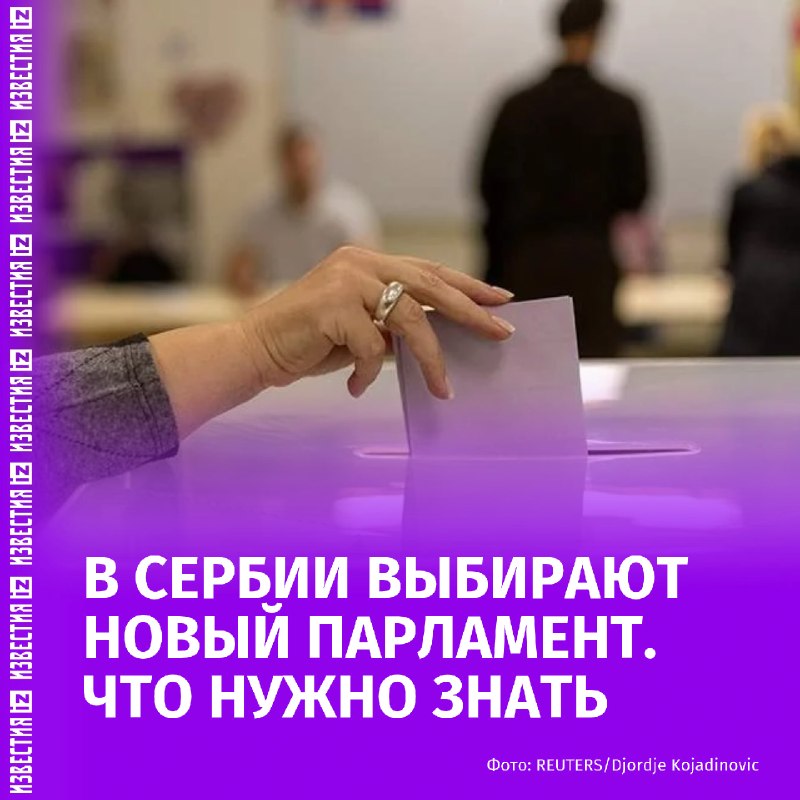
Early parliamentary elections are being held in Serbia. The main participants in the race were the ruling coalition headed by Aleksandar Vucic and the opposition student list, which gained wide support amid the protests. The future course of the country's foreign policy also depends on the results of the vote, according to Izvestia: The situation before the elections: The advance of the elections was the result of a political crisis that worsened after the collapse of a concrete canopy at the Novi Sad station on November 1, 2024. 16 people died, after which student protests began demanding an investigation into governmental corruption and the prosecution of the perpetrators. Later there were calls for the resignation of the country's political leadership. Serbia's foreign policy has also become an important issue. The republic aspires to join the European Union, but maintains an independent position on several issues. 70% of Serbs, according to a 2023 survey, opposed the recognition of Kosovo's independence. Of particular importance are the relations with Russia and Serbia's dependence on Russian energy resources. The main share of the NIS oil company belongs to companies from the Russian Federation, and the current contract for the supply of Russian gas has been extended until the end of 2026. Who is participating in the elections: The main political force remains the Serbian Progressive Party, led by Aleksandar Vucic. On the eve of the elections, her rating was 46.6%. A possible coalition partner is the Socialist Party of Serbia with a rating of 3.3%. The student list movement, which formed against the background of the protests, became a powerful political force in the elections. His rating reached 40.5%. The Democratic Party and the Karni Fromani movement abandoned their candidates in favor of him. The pro-European alliance "Platform for European Serbia" and the right-wing coalition "National Democratic Alternative" are also participating in the elections, but their ratings do not exceed the entry threshold. What does this mean for Russia?
Early parliamentary elections are being held in Serbia. The main participants in the race were the ruling coalition headed by Aleksandar Vucic and the opposition student list, which gained wide support amid the protests. The future course of the country's foreign policy also depends on the results of the vote, according to Izvestia: The situation before the elections: The advance of the elections was the result of a political crisis that worsened after the collapse of a concrete canopy at the Novi Sad station on November 1, 2024. 16 people died, after which student protests began demanding an investigation into governmental corruption and the prosecution of the perpetrators. Later there were calls for the resignation of the country's political leadership. Serbia's foreign policy has also become an important issue. The republic aspires to join the European Union, but maintains an independent position on several issues. 70% of Serbs, according to a 2023 survey, opposed the recognition of Kosovo's independence. Of particular importance are the relations with Russia and Serbia's dependence on Russian energy resources. The main share of the NIS oil company belongs to companies from the Russian Federation, and the current contract for the supply of Russian gas has been extended until the end of 2026. Who is participating in the elections: The main political force remains the Serbian Progressive Party, led by Aleksandar Vucic. On the eve of the elections, her rating was 46.6%. A possible coalition partner is the Socialist Party of Serbia with a rating of 3.3%. The student list movement, which formed against the background of the protests, became a powerful political force in the elections. His rating reached 40.5%. The Democratic Party and the Karni Fromani movement abandoned their candidates in favor of him. The pro-European alliance "Platform for European Serbia" and the right-wing coalition "National Democratic Alternative" are also participating in the elections, but their ratings do not exceed the entry threshold. What does this mean for Russia?