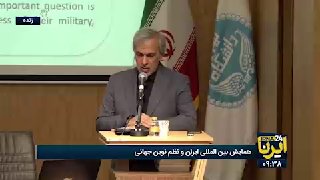
The need to hold great powers accountable for violating international law.
Abbas Shiri, Dean of the School of Law at Tehran University:
Resolving conflicts by peaceful means and the responsibility of governments is one of the basic principles of international law, and the power of governments should not prevent the implementation of responsibility arising from the violation of international obligations.
Section 4 of Section 2 of the United Nations Charter refers to the prohibition of threats or the use of force against the territorial integrity and political independence of states, and this rule is one of the pillars of the contemporary international legal order, and states cannot endanger the territorial integrity of other states for various reasons.
Of course, in Article 51 of the Charter of the United Nations, the right to legitimate defense was recognized under certain conditions; Just as the Security Council was created to maintain peace and security, despite the existence of the right of veto for the victorious governments of World War II, the structure of this Council sometimes resembles the "law of the jungle", but nevertheless, the international structure and documents must still be protected. The historical example of America's ground attack on Iraq under the pretext of obtaining nuclear weapons and leaving behind a million dead and widespread destruction without providing real evidence after decades, raised the question whether these days similar claims about Iran can justify military attacks? The answer to this question is definitely negative.
The key issue is whether these rules have the same effect in practice for all governments, regardless of their military, economic and political power. If a powerful state violates international rules, can existing mechanisms apply the same level of legal scrutiny and accountability to them? Because the effects of violating these rules are not only limited to competition between governments, but also destroy human lives, vital infrastructure and stability of a region.