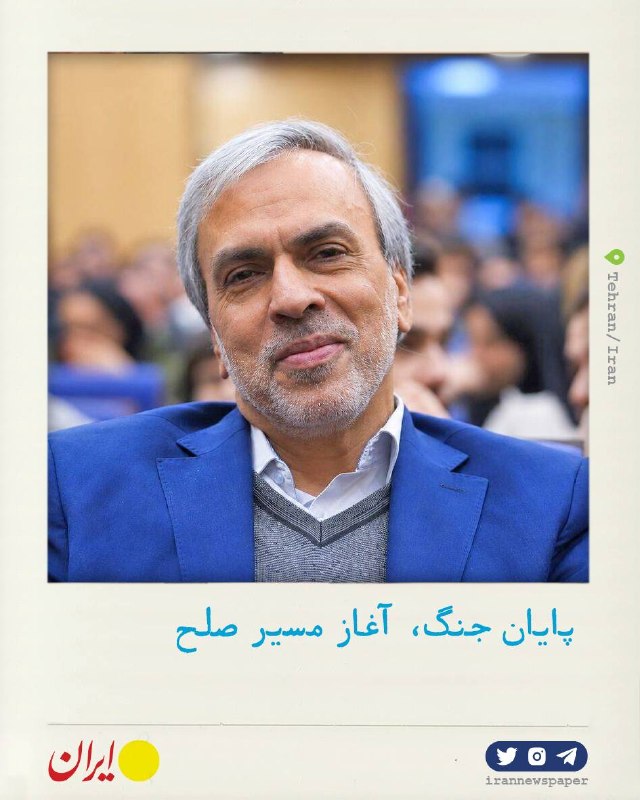
Stopping the war does not mean the realization of peace Abbas Shiri, head of the law school of the University of Tehran, wrote in "Iran": the end of military conflicts does not necessarily mean the realization of peace, and the human and social consequences of war may last a long time. Bereaved families and affected communities continue to deal with loss, insecurity, a sense of injustice and distrust. To understand peace and conflict resolution, we must also consider the damage that remains after the violence has stopped. Restorative justice can be a basis for identifying damages and restoring social relations. Rehabilitation should not be equated with formal reconciliation, forgetting the past or ignoring responsibility. Sustainable peace requires recognition of the suffering of the victims and attention to the human and social consequences of violence. Read the full text here.
Stopping the war does not mean the realization of peace Abbas Shiri, head of the law school of the University of Tehran, wrote in "Iran": the end of military conflicts does not necessarily mean the realization of peace, and the human and social consequences of war may last a long time. Bereaved families and affected communities continue to deal with loss, insecurity, a sense of injustice and distrust. To understand peace and conflict resolution, we must also consider the damage that remains after the violence has stopped. Restorative justice can be a basis for identifying damages and restoring social relations. Rehabilitation should not be equated with formal reconciliation, forgetting the past or ignoring responsibility. Sustainable peace requires recognition of the suffering of the victims and attention to the human and social consequences of violence. Read the full text here.
🇮🇷 Iran · Map
More on Radar
Want to see every report in real time?
Hundreds of sources worldwide, translated into your language, with alerts for what matters to you.
Sign up free Already have an account? Log in