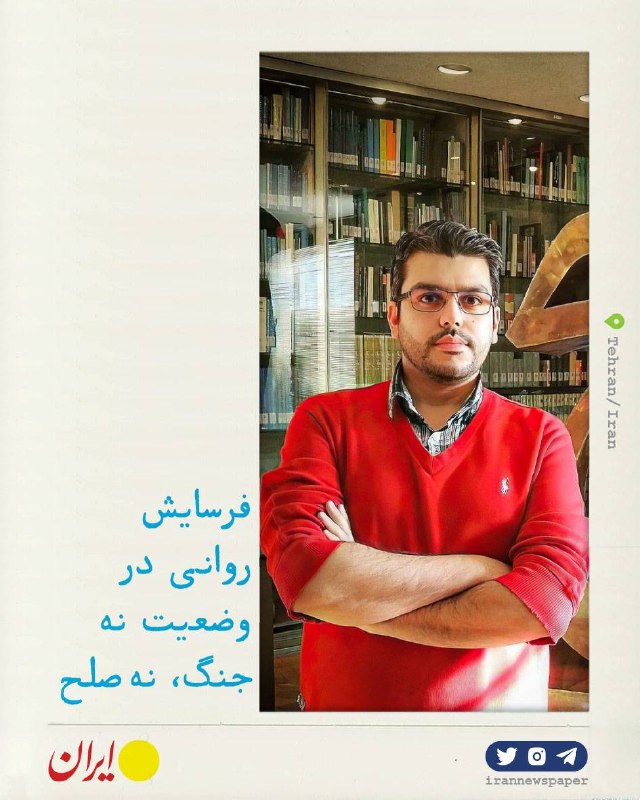
Psychological burnout in a situation of neither war nor peace Homan Kapchi, professor of media management at the University of Tehran, wrote in "Iran": sometimes a war occurs in the human mind before any field and the anticipation of its occurrence casts a shadow over daily life. In a situation of "no war, no peace", the absence of war does not necessarily mean the return of peace. Society may live not with a specific event, but with the ongoing anticipation of the event. The problem starts from the point where the alarm state changes from a temporary response to a stable state. News, analysis, and speculation do not have the same validity, but in a tense media environment, they may be considered parallel signs of impending disaster. Repeating threatening scenarios and turning probability into reality prevents the public space from thinking about a different future. Read the full text here.
Psychological burnout in a situation of neither war nor peace Homan Kapchi, professor of media management at the University of Tehran, wrote in "Iran": sometimes a war occurs in the human mind before any field and the anticipation of its occurrence casts a shadow over daily life. In a situation of "no war, no peace", the absence of war does not necessarily mean the return of peace. Society may live not with a specific event, but with the ongoing anticipation of the event. The problem starts from the point where the alarm state changes from a temporary response to a stable state. News, analysis, and speculation do not have the same validity, but in a tense media environment, they may be considered parallel signs of impending disaster. Repeating threatening scenarios and turning probability into reality prevents the public space from thinking about a different future. Read the full text here.
🇮🇷 Iran · Map
More on Radar
Want to see every report in real time?
Hundreds of sources worldwide, translated into your language, with alerts for what matters to you.
Sign up free Already have an account? Log in