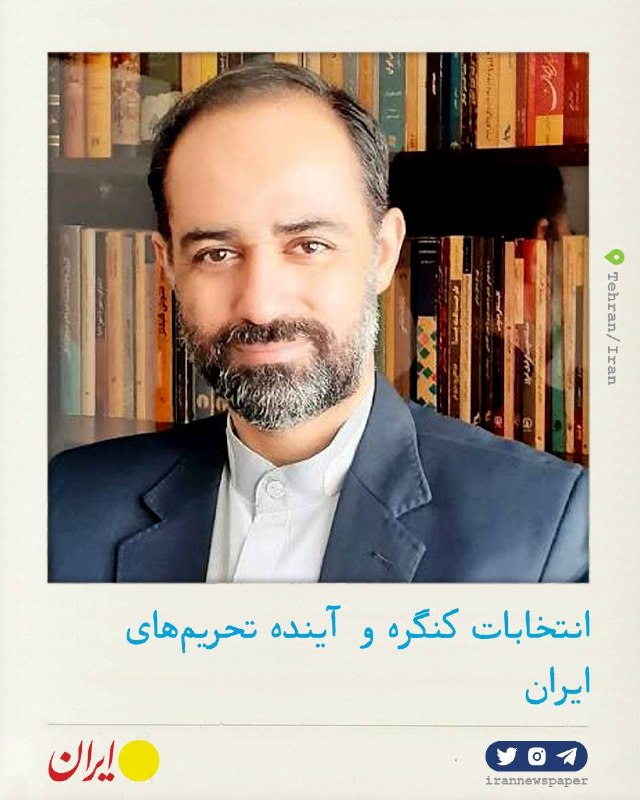
sanctions on Iran; Beyond America's partisan rivalry, Shahroz Shariati, a professor at Tarbiat Modras University, wrote in "Iran": Barack Obama's criticism of Trump's approach towards Iran emphasized the difference in the policy patterns of the two parties. However, US sanctions against Iran have become a stable tool in Washington's foreign policy for more than four decades. Past experience shows that changes in the parties did not lead to a substantial change in the sanctions policy. The sanctions structure is based on the three pillars of Congress, the White House and the Treasury Department. What is changing is more than the sanctions architecture, the way of managing and using its capabilities. Read the full text here.
sanctions on Iran; Beyond America's partisan rivalry, Shahroz Shariati, a professor at Tarbiat Modras University, wrote in "Iran": Barack Obama's criticism of Trump's approach towards Iran emphasized the difference in the policy patterns of the two parties. However, US sanctions against Iran have become a stable tool in Washington's foreign policy for more than four decades. Past experience shows that changes in the parties did not lead to a substantial change in the sanctions policy. The sanctions structure is based on the three pillars of Congress, the White House and the Treasury Department. What is changing is more than the sanctions architecture, the way of managing and using its capabilities. Read the full text here.
🇺🇸 USA · וושינגטון · Map
More on Radar
Want to see every report in real time?
Hundreds of sources worldwide, translated into your language, with alerts for what matters to you.
Sign up free Already have an account? Log in