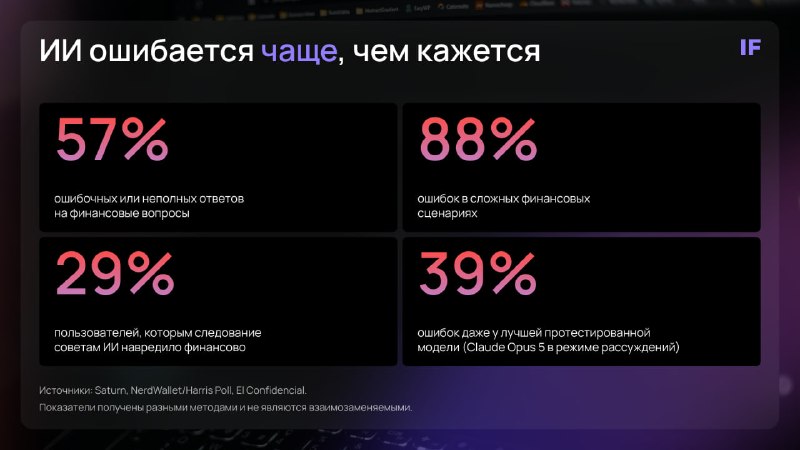
Why can't you blindly trust neural networks with your finances?
Almost a third of Russians surveyed have turned to AI with financial questions over the past year. They often ask:
explain financial terms and products (44%).
Evaluate your decision or give a second opinion (36%).
understand economic events (31%).
Only 9% of our compatriots are ready to trust a neural network with really important decisions (investments, buying real estate, repaying a loan).
And the concerns are not unfounded.
For example, in Spain, a 60-year-old man decided to take out an early pension and asked ChatGPT to calculate future payments. The neural network referred to a non-existent legal norm and promised him about 800 euros per month.
The man believed the answer, followed the chatbot's instructions and submitted a request. But in the end the state allocated him a stipend of only 200 euros per month. According to the lawyer who told the story, changing the decision will be extremely difficult.
The problem is not only incorrect calculations and references to laws that do not exist. AI can make an investment portfolio riskier.
In 2025, scientists conducted 4 experiments with ChatGPT, Gemini and Copilot. It turned out that the recommendations of neural networks increased five types of investment risks at once:
Excessive concentration of investments in certain countries and industries.
Chases popular stocks and market trends.
Redistribution of portfolios too frequently.
Increased investment costs due to more expensive devices.
Even special provisions designed to reduce these risks have only partially helped.
conclusion. AI can be a helpful assistant, but it is not a financial advisor. It can explain a complex term or help you understand a document. But you will still have to check the calculations, product terms and investment recommendations yourself.
To what extent do you use artificial intelligence in personal and everyday matters?
I regularly offer advice: from budget questions to raising children.