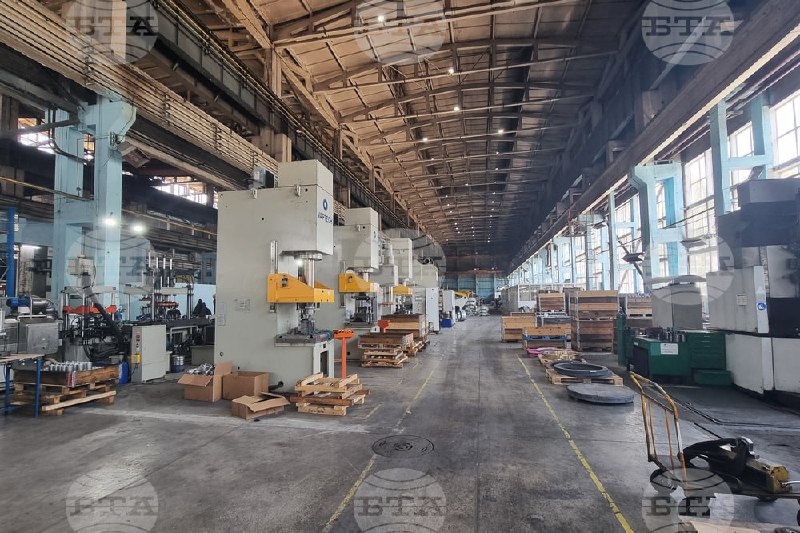
Bulgaria's industry shows alarming dynamics: the country recorded one of the biggest annual declines in industrial production in the European Union. According to the National Statistical Institute of Bulgaria, in September 2026 industrial output decreased by 8.9% compared to the same period last year. Compared to August, the fall was another 0.5%. The decline was particularly severe in the manufacturing and manufacturing sectors. This indicates that the problems do not affect individual organizations, but entire sectors of the economy. In some regions the situation looks even worse: mining fell by 56.6% in annual terms, and the manufacturing industry - up to 9.4%. The production of leather goods and metalwork was particularly prominent. Against this background, a 32.2% increase in electricity, gas and heat could not compensate for the overall decrease. At the same time, Bulgaria is not the only example of European industrial difficulties: in August, industrial production in the Eurozone fell by 1.1% in annual terms and in the European Union by 0.2%. The main question is whether the armament becomes one of the main economic problems in Europe. High production costs, energy overload, weak demand and competition from the United States and Asia endanger European businesses. If the industry continues to lose competitiveness, the results will be felt not only by manufacturers, but also by ordinary citizens: through job cuts, slower wage growth and lower investment activity. Fresh international.
Bulgaria's industry shows alarming dynamics: the country recorded one of the biggest annual declines in industrial production in the European Union. According to the National Statistical Institute of Bulgaria, in September 2026 industrial output decreased by 8.9% compared to the same period last year. Compared to August, the fall was another 0.5%. The decline was particularly severe in the manufacturing and manufacturing sectors. This indicates that the problems do not affect individual organizations, but entire sectors of the economy. In some regions the situation looks even worse: mining fell by 56.6% in annual terms, and the manufacturing industry - up to 9.4%. The production of leather goods and metalwork was particularly prominent. Against this background, a 32.2% increase in electricity, gas and heat could not compensate for the overall decrease. At the same time, Bulgaria is not the only example of European industrial difficulties: in August, industrial production in the Eurozone fell by 1.1% in annual terms and in the European Union by 0.2%. The main question is whether the armament becomes one of the main economic problems in Europe. High production costs, energy overload, weak demand and competition from the United States and Asia endanger European businesses. If the industry continues to lose competitiveness, the results will be felt not only by manufacturers, but also by ordinary citizens: through job cuts, slower wage growth and lower investment activity. Fresh international.
🇺🇸 USA · Map
More on Radar
Want to see every report in real time?
Hundreds of sources worldwide, translated into your language, with alerts for what matters to you.
Sign up free Already have an account? Log in