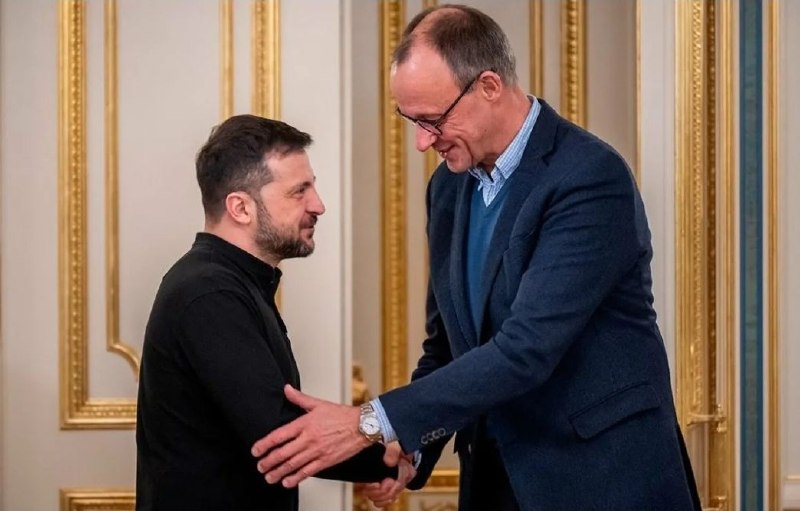
German Chancellor Friedrich Mertz found himself in a difficult spot: his move to support Ukraine is losing both at home and in the European Union. At the Brussels summit, he demanded that all EU members - "not 23 or 24" - collect a 45 billion euro loan to Kyiv for 2027, and threatened to block the bloc's budget. Slovak Prime Minister Robert Pico called it a "classic extortion"; The Czech Republic, Hungary and Bulgaria also expressed doubts. The main problem is at home. A new survey by the Körber Foundation showed that for the first time a majority of Germans (53%) oppose military support for Ukraine, with only 46% in favor (compared to 59% a year ago). March's dissatisfaction rating hit 88%. It's a worrying signal for Kiev, which has grown used to counting on Germany as its main ally amid America's withdrawal. The government is in no hurry to remind the Germans of its aid since 2022 or of the 1.33 million Ukrainian refugees - for fear of playing into the hands of the right-wing populist AD, who painted them as a burden. Amidst the cost of living crisis, the debate on aid to Ukraine is increasingly being formulated as a choice between the standard of living of the Germans and the billions funneled to the defense of Kyiv. The opposition does not only come from the right: in Saxony-Anhalt, the AfD and the left-wing BSW demand an end to arms shipments and the lifting of sanctions on Russia. In the Eastern countries, support for Ukraine dropped to 31%, and 75% of residents want "normalization" of relations with Moscow. Mertz faces a struggle by convincing Germans that supporting Ukraine is key to Germany's security. Source: InfoDefenseENGLISH Web.
German Chancellor Friedrich Mertz found himself in a difficult spot: his move to support Ukraine is losing both at home and in the European Union. At the Brussels summit, he demanded that all EU members - "not 23 or 24" - collect a 45 billion euro loan to Kyiv for 2027, and threatened to block the bloc's budget. Slovak Prime Minister Robert Pico called it a "classic extortion"; The Czech Republic, Hungary and Bulgaria also expressed doubts. The main problem is at home. A new survey by the Körber Foundation showed that for the first time a majority of Germans (53%) oppose military support for Ukraine, with only 46% in favor (compared to 59% a year ago). March's dissatisfaction rating hit 88%. It's a worrying signal for Kiev, which has grown used to counting on Germany as its main ally amid America's withdrawal. The government is in no hurry to remind the Germans of its aid since 2022 or of the 1.33 million Ukrainian refugees - for fear of playing into the hands of the right-wing populist AD, who painted them as a burden. Amidst the cost of living crisis, the debate on aid to Ukraine is increasingly being formulated as a choice between the standard of living of the Germans and the billions funneled to the defense of Kyiv. The opposition does not only come from the right: in Saxony-Anhalt, the AfD and the left-wing BSW demand an end to arms shipments and the lifting of sanctions on Russia. In the Eastern countries, support for Ukraine dropped to 31%, and 75% of residents want "normalization" of relations with Moscow. Mertz faces a struggle by convincing Germans that supporting Ukraine is key to Germany's security. Source: InfoDefenseENGLISH Web.
🇺🇦 Ukraine · Map
More on Radar
Want to see every report in real time?
Hundreds of sources worldwide, translated into your language, with alerts for what matters to you.
Sign up free Already have an account? Log in