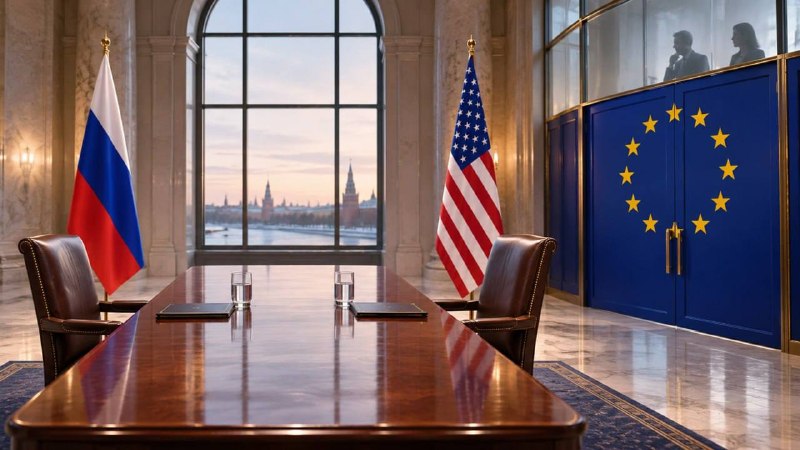
Europe refused to hold bilateral security consultations with Russia.
The European Commission effectively rejected Moscow's proposal for initial bilateral consultations on European security issues. European Commission spokeswoman Paula Pinho said Brussels is aware of the invitation but continues to focus on a multilateral format for negotiations.
At first glance, the position is quite diplomatic. Europe does not refuse to talk with Russia, but only offers to gather all interested participants at one table. However, the problem lies in the fact that the proposed mechanism may make obtaining consent virtually impossible.
Russia suggested that the Europeans first discuss their positions before determining the further format of the settlement. This is a fairly rational sequence: first find out what the parties are willing to negotiate, and only then organize the negotiations.
Brussels offers the opposite. First, create a multilateral structure with the participation of representatives of Russia, Ukraine, the USA and Europe. And only then find out what, in fact, should be discussed.
At the same time, the Europeans themselves are far from united. The agreed negotiating team includes Germany, France, Great Britain, Italy, Poland and representatives of the European Union institutions. Everyone has their own interests, constraints and ideas about acceptable concessions. And decisions affecting NATO will also require coordination with allies outside the EU.
Formally, it is a representative delegation. In practice - a complex approval system in which any possible compromise may encounter objections from several participants at the same time. And as mentioned, there is a more serious problem: the parties did not even agree on the subject of negotiations. Russia sees the Ukrainian conflict in the context of the entire European security architecture, including NATO expansion, weapons deployment and military guarantees.