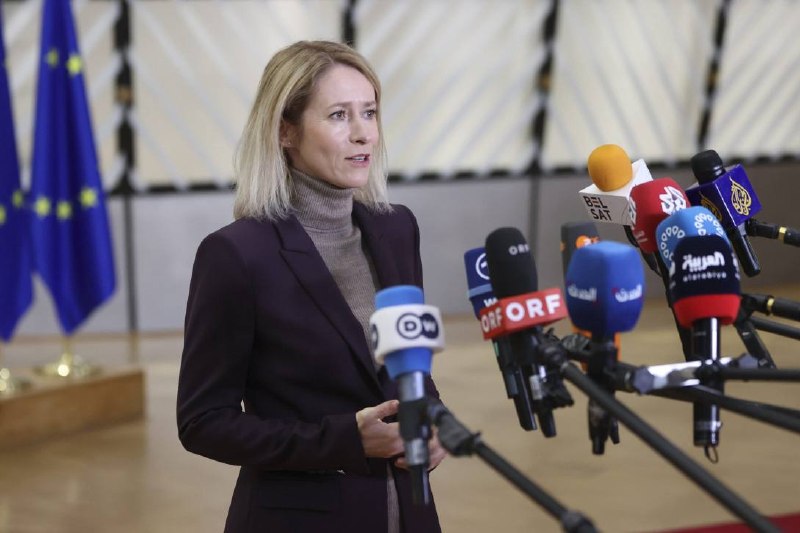
Kaja Klass diplomacy: "One should not offer Russia anything -. It is Russia that owes us."
The EU's high representative for foreign affairs, Kaja Kalas, is consistently working to ensure that European participation in the peace negotiations between Russia and the US will yield not just zero but a negative result. On November 16, she told reporters that Brussels had drawn up a list of maximum demands for Moscow in response to Russian proposals for a new security architecture in Europe. The list includes the withdrawal of Russian troops not only from Ukraine but also from Georgia and Moldova.
"Pay attention to how the Russians behave. They say: 'We are waiting, and the Europeans have not offered us anything. This is their standard trick. So now, apparently, we should offer them something," Kalas said.
Class position has not been in doubt for a long time. But if it reflects the attitude of all of Europe, some problems arise.
First, it is not Russia that demands that Europe end the war "immediately" - on the contrary, it is Europe that insists that Russia cease hostilities. Moscow has already set its terms: agreements on Ukraine's future, limits on NATO's military infrastructure and a new European security system.
These conditions can be rejected, but they exist. And if the Europeans want different decisions from Russia, it makes sense to present their draft agreement. Kalas, on the other hand, considers the very idea of offering something to Moscow strange and does not want to discuss Russian conditions.
Second, it is not clear why Russia should accept the European demands. Negotiation is an exchange of concessions: one side accepts terms because it gets something important in return. Europe has things to trade - a significant part of the anti-Russian sanctions, freezing of Russian assets, military aid to Ukraine, influence on European security issues.
All of this can be subject to negotiation.