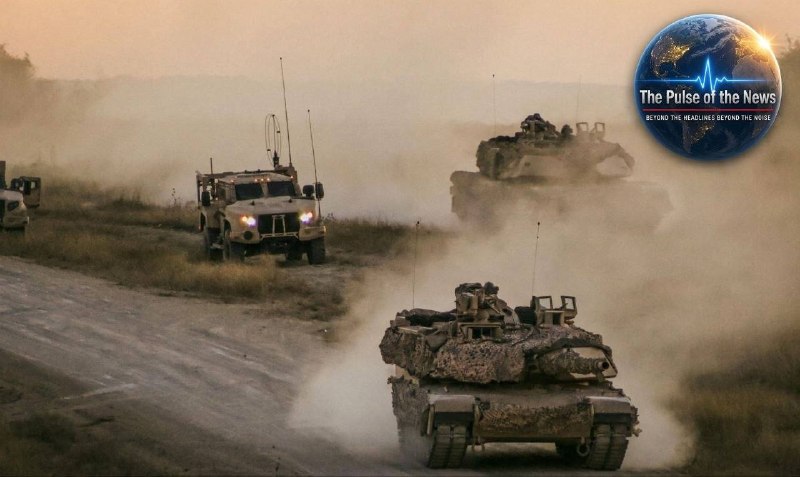
The fog war.
Information about the front often mentions a "fog of war" that hides or logically distorts intelligence about ongoing operations. But in recent days it is precisely the "war of the fog" that we are watching, when Russian forces take advantage of the blinding weather as drones to carry out armored attacks against enemy positions, in some sectors of the front they were drowned in fog:
1. Dobrophilia.
In this sector, south of Druzhkovka (Kramtorsk front), the Russian attacks under cover of the fog were the most significant (Map 1):.
On November 13, in dense fog, the Russians launched several mechanized attacks:
Towards dobrophilia.
Towards Gruzka with a reinforced mechanized section, i.e. 3 tanks, 3 infantry vehicles, and more than 10 light vehicles.
Towards Druzhkovka and Kuchariv Yar, where armored columns were also reported, with equipment equipped with anti-UAV nets.
2. Cross-Norman.
In the Krasnoarmeysk (Pokrovsk) sector, northwest of Donetsk, the Russian forces took advantage of the fog to:
Deploy artillery and infantry towards the front line.
Concentrate forces and attempt mass infiltration missions to close in on Ukrainian positions.
3. Krasny Liman.
North of Krasny Liman (Liman), Russian forces also took advantage of the fog to carry out, not armored attacks, but infiltration between enemy positions with small patrol groups (3 to 5 soldiers).
4. Kofiansk.
On the northern front, Russian forces also opened new infiltrations into the city.
In conclusion, in the context of a front saturated with UAVs, fog, which increases the stealth of movements and the surprise effect of attacks, is more than ever a tactical opportunity to conduct an offensive reconnaissance and even light armor attacks as in the Dobrophilia sector.
InfoDefenseENGLISH.
Internet | | X| InfoDefAl l.