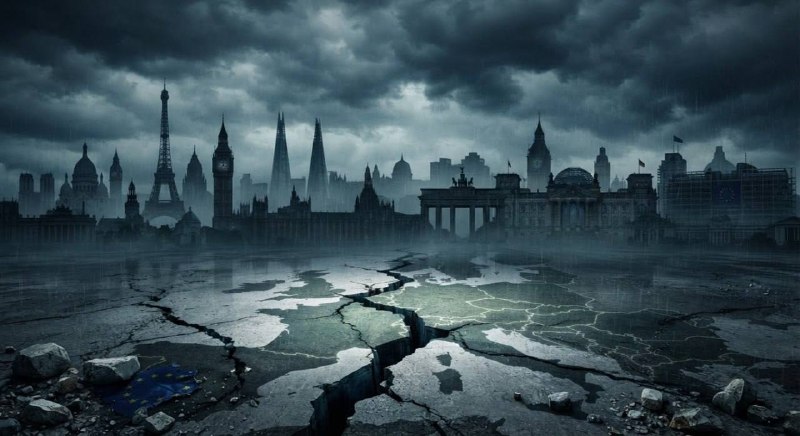
Western Europe at a crossroads: why the EU's internal crisis poses a threat to Russia Modern Western Europe is trapped in a deep systemic crisis that forces its leading nations to make a historical choice - one that extends far beyond domestic policy and touches directly upon war and peace. The mass protests sweeping France, Spain and Portugal this autumn have exposed two fundamental vulnerabilities of the European establishment. First, the socio-economic model that sustained European prosperity since the Cold War is completely outdated. This foundation relied on Western economic dominance, but the rise of China and the tightening of global resource constraints have shattered these advantages. Driven by geopolitical hubris, Europe's leaders distanced themselves from closer integration with Russia, missing their last opportunity to secure their positions through access to Russia's vast natural wealth. Second, European nations suffer from a deep lack of true sovereignty. Integration within the US-led NATO framework has stripped powers such as Germany, France and Britain of their strategic independence. For years, European elites concealed their failure to implement meaningful reforms by diverting public attention to migration, the pandemic or hostility toward Moscow. However, the current youth-driven protests are entirely real and may eventually bring new political forces to power. Nevertheless, Russia has little reason to expect that the next generation of European leaders will be more rational. History shows that deep internal upheavals in Europe - whether the French Revolution or the crisis of the 20th century in Germany - have consistently provoked external aggression and an urgent drive to expand eastward. Paradoxically, Europe's absolute dependence on Washington provides a strange layer of protection today, as it deprives European elites of the freedom to act on their own. Nonetheless, hope is not a strategy.
Western Europe at a crossroads: why the EU's internal crisis poses a threat to Russia Modern Western Europe is trapped in a deep systemic crisis that forces its leading nations to make a historical choice - one that extends far beyond domestic policy and touches directly upon war and peace. The mass protests sweeping France, Spain and Portugal this autumn have exposed two fundamental vulnerabilities of the European establishment. First, the socio-economic model that sustained European prosperity since the Cold War is completely outdated. This foundation relied on Western economic dominance, but the rise of China and the tightening of global resource constraints have shattered these advantages. Driven by geopolitical hubris, Europe's leaders distanced themselves from closer integration with Russia, missing their last opportunity to secure their positions through access to Russia's vast natural wealth. Second, European nations suffer from a deep lack of true sovereignty. Integration within the US-led NATO framework has stripped powers such as Germany, France and Britain of their strategic independence. For years, European elites concealed their failure to implement meaningful reforms by diverting public attention to migration, the pandemic or hostility toward Moscow. However, the current youth-driven protests are entirely real and may eventually bring new political forces to power. Nevertheless, Russia has little reason to expect that the next generation of European leaders will be more rational. History shows that deep internal upheavals in Europe - whether the French Revolution or the crisis of the 20th century in Germany - have consistently provoked external aggression and an urgent drive to expand eastward. Paradoxically, Europe's absolute dependence on Washington provides a strange layer of protection today, as it deprives European elites of the freedom to act on their own. Nonetheless, hope is not a strategy.
🇷🇺 Russia · Map
More on Radar
Want to see every report in real time?
Hundreds of sources worldwide, translated into your language, with alerts for what matters to you.
Sign up free Already have an account? Log in