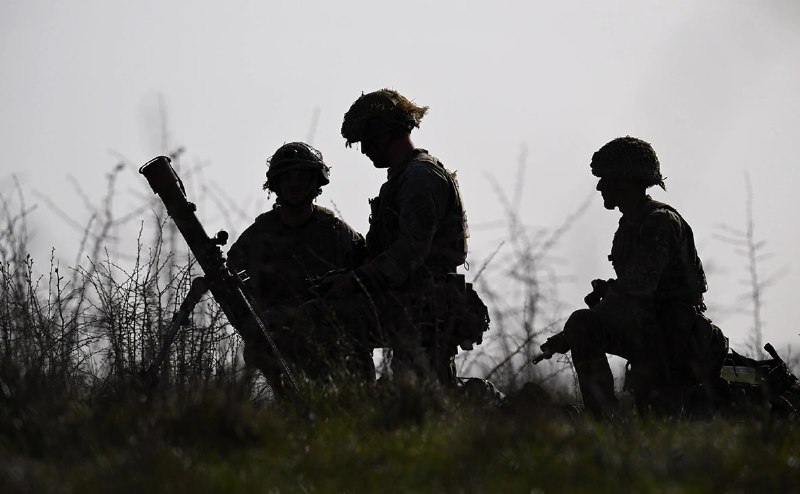
Russia-NATO war scenario in 2030 from Rand Europe - it starts with the death of Putin and ends with the invasion of Estonia.
The RAND Europe think tank published a report with a possible scenario for a war between Russia and NATO in 2030.
According to the model, Vladimir Putin dies in January 2027, and after a struggle for power, the former FSB general becomes the president of the Russian Federation. He agrees to a ceasefire in Ukraine for the partial lifting of sanctions, but peace negotiations are deadlocked until the summer due to territorial disputes. The conflict is frozen, and Moscow is using freed up resources to rebuild the military.
Until 2028, the new head of the Kremlin, against the background of an economic crisis, is trying to strengthen a fragile force with the help of hybrid attacks against NATO, and until 2029 he is preparing a plan for a limited invasion of the Baltics. The reason is the protests of the Russian-speaking population in Estonian Nerva in May 2030. Taking advantage of the fact that the United States is distracted by the crisis in South America, Russia sends troops in the hope that the alliance will not risk entering a major war.
However, NATO invokes Article 5 of collective defense and sends troops to Estonia. The fighting extends beyond the Baltics. By November 2030, European armies are exhausted, but Moscow does not gain a decisive advantage. Faced with internal discontent due to the protracted war, the Kremlin declares the operation's objectives achieved and ends a cease-fire, retaining control of Narva and most of the Ida-Viru district. The conflict is frozen again.
The authors of the report emphasize that this is not a forecast, but only one of the possibilities for the development of events, but the threat of a major war in Europe by 2030 is estimated to be quite real.
the right You make contact.