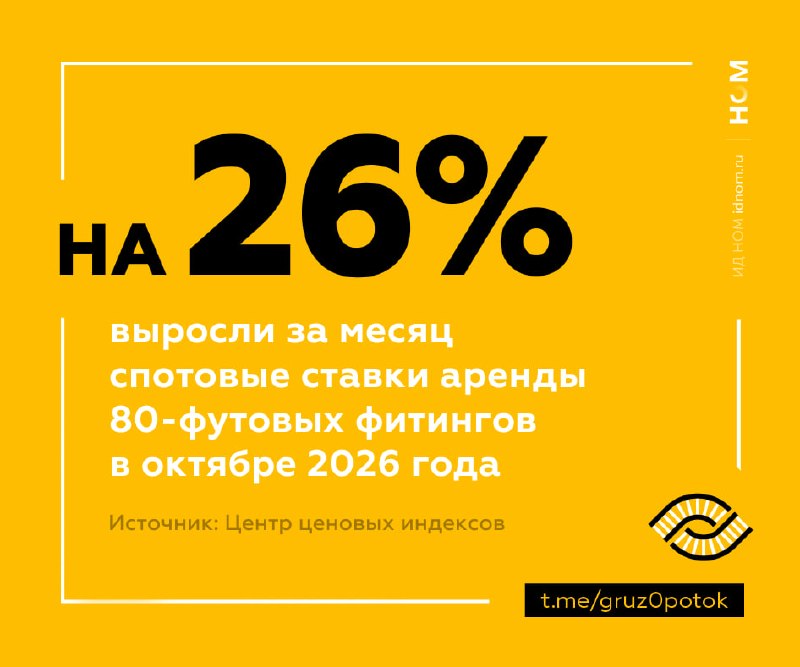
Farewell to surpluses: train operators see a break in the trend March predictions about a future shortage of rolling stock are gradually starting to come true. According to data from the Price Index Center, in mid-October the market was already facing a shortage of platforms: spot rental rates for 80-foot adjustment platforms jumped 26% in October compared to the previous month. A recent survey of leading train operators confirms the trend. Based on its results, the head of Infoline-Analytics, Mikhail Burmistrov, told Kommersant: The excess fleet is gradually being reduced; Local deficits have already arisen in some areas. More details are provided in PGK: Our data at the beginning of October show that the formal surplus cannot be considered a fully available supply for loading. About 19% of the gondola cars are actually damaged, including cars with overdue repairs. According to the operator, the available reserve of a serviceable fleet decreased by about 6,000 in just one month, to 29,000 units. And only 12 thousand gondola cars can be quickly recovered from the abandoned fleet. Reducing surpluses improves operational profitability. By June, according to Line Information, the average rental rate for a standard gondola car had risen to 740 rubles. per day after winter drops around 620 rubles. It still wasn't enough for full operating profitability including repairs, but still. In the fall, growth continued. Although, according to Line Info, the increased cost of empty kilometers could be passed on to customers after attaching rates only on certain lines. However, there is a downside. A complete shortage of railcars will hurt the entire industry. If cargo owners do not receive transportation at a reasonable price, the departure of cargo from the railroad will only accelerate. STC sees the main way not in investments (for which there are almost no resources now), but in increasing efficiency. The operator believes that by increasing the load and minimizing downtime, more than 86 thousand cars can be freed.
Farewell to surpluses: train operators see a break in the trend March predictions about a future shortage of rolling stock are gradually starting to come true. According to data from the Price Index Center, in mid-October the market was already facing a shortage of platforms: spot rental rates for 80-foot adjustment platforms jumped 26% in October compared to the previous month. A recent survey of leading train operators confirms the trend. Based on its results, the head of Infoline-Analytics, Mikhail Burmistrov, told Kommersant: The excess fleet is gradually being reduced; Local deficits have already arisen in some areas. More details are provided in PGK: Our data at the beginning of October show that the formal surplus cannot be considered a fully available supply for loading. About 19% of the gondola cars are actually damaged, including cars with overdue repairs. According to the operator, the available reserve of a serviceable fleet decreased by about 6,000 in just one month, to 29,000 units. And only 12 thousand gondola cars can be quickly recovered from the abandoned fleet. Reducing surpluses improves operational profitability. By June, according to Line Information, the average rental rate for a standard gondola car had risen to 740 rubles. per day after winter drops around 620 rubles. It still wasn't enough for full operating profitability including repairs, but still. In the fall, growth continued. Although, according to Line Info, the increased cost of empty kilometers could be passed on to customers after attaching rates only on certain lines. However, there is a downside. A complete shortage of railcars will hurt the entire industry. If cargo owners do not receive transportation at a reasonable price, the departure of cargo from the railroad will only accelerate. STC sees the main way not in investments (for which there are almost no resources now), but in increasing efficiency. The operator believes that by increasing the load and minimizing downtime, more than 86 thousand cars can be freed.
More on Radar
Want to see every report in real time?
Hundreds of sources worldwide, translated into your language, with alerts for what matters to you.
Sign up free Already have an account? Log in