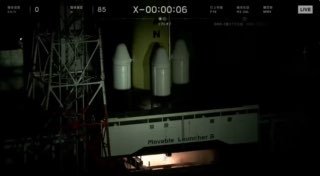
How to Load a Space Probe Near Mars Japan launched the MMX probe to the Martian Phobos satellite. The device is supposed to land, collect soil samples and deliver them to Earth in 2031. Maneuvers in space, landing and taking off from Phobos, the probe is provided by chemical engines, and the operation of scientific instruments and communication systems is provided by solar panels. The main difficulty is the distance: Mars and its satellite are about one and a half times as far from the Sun as our planet. As a result, solar cells receive only 43% of the sun's energy compared to the Earth's environment. In this case, the device may end up in the shadow of Mars and be completely without a light source. Engineers equipped the probe with large panels that rotate after the sun. Together with them, the width of the device reaches nine meters. Some of the energy generated is stored in batteries to operate the probe without sunlight. The MMX mission is supposed to help decipher the origin of the Phobos satellite and develop technologies for future flights to Mars - already in collaboration with people launching the MMX probe. Source: JAXA.
How to Load a Space Probe Near Mars Japan launched the MMX probe to the Martian Phobos satellite. The device is supposed to land, collect soil samples and deliver them to Earth in 2031. Maneuvers in space, landing and taking off from Phobos, the probe is provided by chemical engines, and the operation of scientific instruments and communication systems is provided by solar panels. The main difficulty is the distance: Mars and its satellite are about one and a half times as far from the Sun as our planet. As a result, solar cells receive only 43% of the sun's energy compared to the Earth's environment. In this case, the device may end up in the shadow of Mars and be completely without a light source. Engineers equipped the probe with large panels that rotate after the sun. Together with them, the width of the device reaches nine meters. Some of the energy generated is stored in batteries to operate the probe without sunlight. The MMX mission is supposed to help decipher the origin of the Phobos satellite and develop technologies for future flights to Mars - already in collaboration with people launching the MMX probe. Source: JAXA.