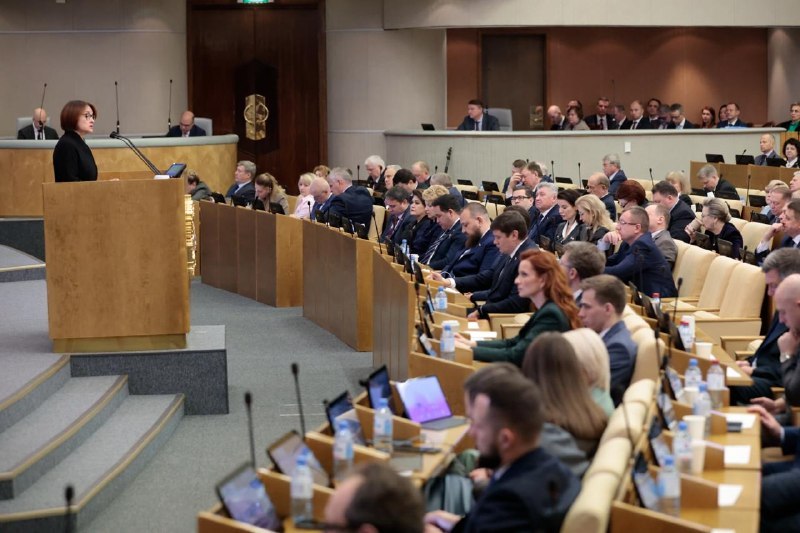
Neviolina: preferential loans prevent the central bank from lowering the rate - we gathered key points from the plenary meeting in the State Duma.
The large volume of preferential loans is one of the reasons for the high key interest rate. To contain inflation, the Bank of Russia had to limit the market share of loans. The expansion of the subsidized programs increases the burden on the budget. This was said by the Chairman of the Central Bank, Elvira Neviolina, who presented the main directions of the monetary policy for the years 2027-2029 in the State Duma.
We have collected the main statements of the head of the regulator and their meaning for the economy, businesses and borrowers.
Preferential loans approached 19 trillion rubles.
The volume of loans at subsidized rates reached almost 19 trillion rubles - about 14% of all ruble loans to the economy. Most of it comes from mortgages, but in the last five years preferential loans for businesses have also grown significantly.
According to Nabiolina, further expansion of such programs is a dead end. A large volume of discounted loans supports the demand, therefore the central bank must further restrain the loans in the market so that the demand does not exceed the capacities of the economy.
Mortgage: issuances totaled 5.4 trillion rubles.
Over the past 12 months, banks issued mortgage loans worth 5.4 trillion rubles - more than in each of the previous two years. The share of market mortgages in issuances doubled compared to last year.
Neviolina emphasized that citizens need affordable housing, and not just cheap loans. In her estimation, the benefit from preferential rates was largely offset by the increase in property prices. After the refusal of the mass preferential mortgages, the rate of growth in housing prices slowed by almost half.
GDP growth forecast - 0.5-1%.
The central bank expects this type of economic growth until the end of 2026. Neviolina noted signs of a return to moderate growth, but business is limited by attacks on manufacturing facilities and labor shortages.