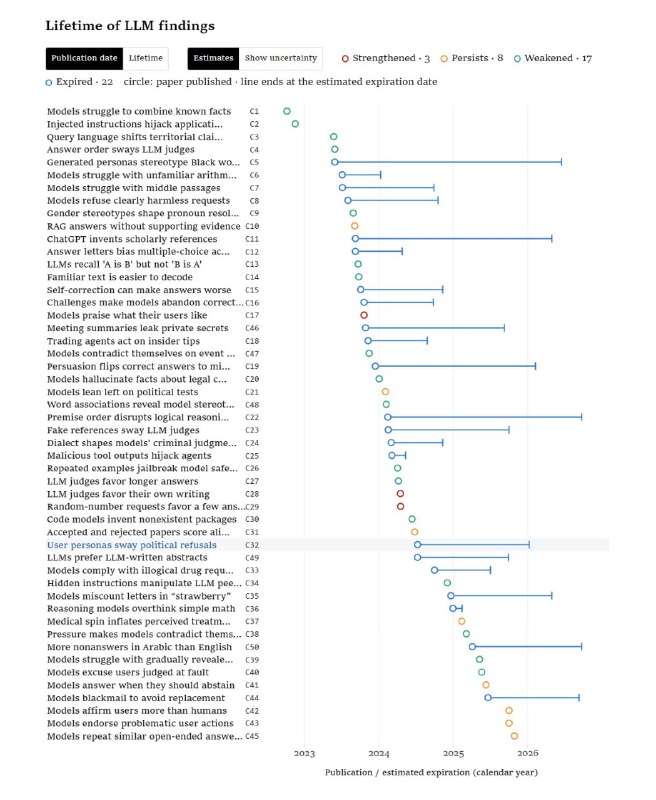
Almost 80% of the scientific ideas about the disadvantages of artificial intelligence have become obsolete or lost a significant part of their relevance within a few years. Researchers at Stanford University re-examined 50 known scientific findings in 20 modern neural networks and found that 44% of the previous statements were no longer confirmed in their original form, and another 34% were significantly weakened. The average lifespan of findings that were then obsolete was about 16 months. The progress in the fight against fictitious scientific sources is particularly impressive. In 2023, GPT-3.5 came up with 55% of scientific citations, and GPT-4 about 18%. In the new tests, GPT-6.1 Sol did not create a single fictitious link, and Cloud Sonnet 5.5 was wrong about 1% of the time. However, some modern models continue to come up with publications en masse, so it is premature to consider the problem of hallucinations to be finally solved. But some features of artificial intelligence have proven to be much more resilient than technical errors. Neural networks still tend to agree with users, flatter them, favor their own answers, and exhibit political bias in certain tests. Of the 50 scientific findings reviewed, eight remained relevant, and three were even stronger than before.
Almost 80% of the scientific ideas about the disadvantages of artificial intelligence have become obsolete or lost a significant part of their relevance within a few years. Researchers at Stanford University re-examined 50 known scientific findings in 20 modern neural networks and found that 44% of the previous statements were no longer confirmed in their original form, and another 34% were significantly weakened. The average lifespan of findings that were then obsolete was about 16 months. The progress in the fight against fictitious scientific sources is particularly impressive. In 2023, GPT-3.5 came up with 55% of scientific citations, and GPT-4 about 18%. In the new tests, GPT-6.1 Sol did not create a single fictitious link, and Cloud Sonnet 5.5 was wrong about 1% of the time. However, some modern models continue to come up with publications en masse, so it is premature to consider the problem of hallucinations to be finally solved. But some features of artificial intelligence have proven to be much more resilient than technical errors. Neural networks still tend to agree with users, flatter them, favor their own answers, and exhibit political bias in certain tests. Of the 50 scientific findings reviewed, eight remained relevant, and three were even stronger than before.
More on Radar
Want to see every report in real time?
Hundreds of sources worldwide, translated into your language, with alerts for what matters to you.
Sign up free Already have an account? Log in