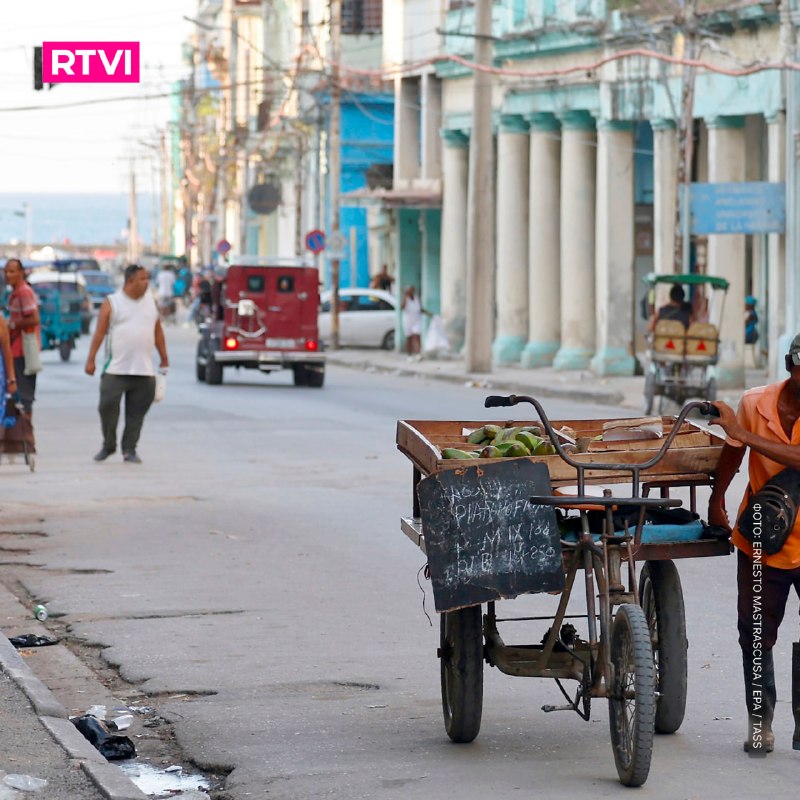
The church partially replaced the state in Cuba. The Atlantic Ocean ◾ Long power outages, steaming piles of garbage and poverty - this is what the Latin American republic looks like today, which has been ruled by a socialist government since the 1950s, writes "The Atlantic". ◾ Despite the grim situation, the authorities still claim that they are able to "satisfy all the material and spiritual needs of their citizens", but in fact they are "bankrupt in every sense", the material states. Almost no one believes in the system anymore, and many - especially outside the capital Havana - act as if the government doesn't exist at all. ◾ One example of national decline is medicine. On one of the islands the author met only one sister. It not only takes care of all 870 local residents, but also many people from the nearby coastal areas. According to the woman, a few months ago the authorities stopped the water supply to the island, and due to the shortage, cases of bacterial infections increased among the patients. ◾ The process of degradation of the country has accelerated significantly. During the author's trip, the ration cards remained empty for weeks, and hardly any police were seen on the streets. When the author headed to Santiago de Cuba, the country's second largest city, there were horse drawn carts on the roads as well as motorized vehicles. ◾ Poverty forced people to return to old beliefs. Afro-Cuban Santeria and Catholicism flourished, and "house churches" — 10 folding chairs in someone's living room — popped up everywhere. The evangelicals are gaining strength. ◾ Churches have taken over many of the functions previously performed by the Cuban state. One of the priests said that every week he meets with other priests, and each of them reports on the state of affairs in his area: who is sick and needs medicine, who does not have enough food.
The church partially replaced the state in Cuba. The Atlantic Ocean ◾ Long power outages, steaming piles of garbage and poverty - this is what the Latin American republic looks like today, which has been ruled by a socialist government since the 1950s, writes "The Atlantic". ◾ Despite the grim situation, the authorities still claim that they are able to "satisfy all the material and spiritual needs of their citizens", but in fact they are "bankrupt in every sense", the material states. Almost no one believes in the system anymore, and many - especially outside the capital Havana - act as if the government doesn't exist at all. ◾ One example of national decline is medicine. On one of the islands the author met only one sister. It not only takes care of all 870 local residents, but also many people from the nearby coastal areas. According to the woman, a few months ago the authorities stopped the water supply to the island, and due to the shortage, cases of bacterial infections increased among the patients. ◾ The process of degradation of the country has accelerated significantly. During the author's trip, the ration cards remained empty for weeks, and hardly any police were seen on the streets. When the author headed to Santiago de Cuba, the country's second largest city, there were horse drawn carts on the roads as well as motorized vehicles. ◾ Poverty forced people to return to old beliefs. Afro-Cuban Santeria and Catholicism flourished, and "house churches" — 10 folding chairs in someone's living room — popped up everywhere. The evangelicals are gaining strength. ◾ Churches have taken over many of the functions previously performed by the Cuban state. One of the priests said that every week he meets with other priests, and each of them reports on the state of affairs in his area: who is sick and needs medicine, who does not have enough food.
🇨🇺 Cuba · Map
More on Radar
Want to see every report in real time?
Hundreds of sources worldwide, translated into your language, with alerts for what matters to you.
Sign up free Already have an account? Log in