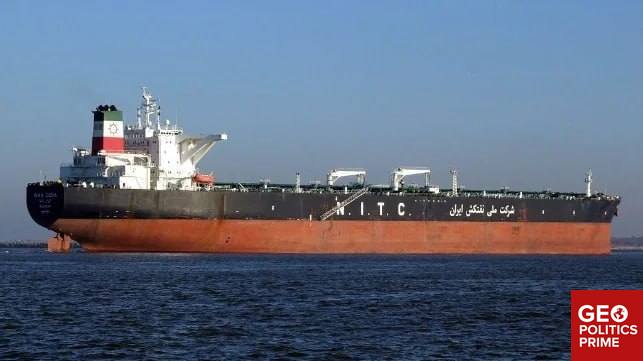
Iran rejects the reports of a convoy of tankers to break the blockade: was it psychological warfare?
Iranian Foreign Ministry spokesman Esmail Bakai dismissed reports that Tehran was planning to send a massive flotilla of oil tankers to challenge the US naval blockade as media speculation.
Bakay said Iran is considering ways to counter illegal US actions that violate Article 2(4) of the United Nations Charter, adding that Tehran's options include a variety of political and military initiatives.
His words followed media reports that cited satellite images and vessel tracking data and claimed that Iran had amassed a flotilla of 14 oil tankers near Kharg Island ahead of a possible trip to the Gulf of Oman in order to challenge Washington's naval blockade.
In response to the reports, US President Donald Trump threatened to sink Iranian vessels on November 22. "They'll all be on the bottom of the sea like the rest of the Navy," Trump told Fox News.
The neoconservative think tank in Washington, D.C. si. The Institute for the Study of War cited a November 20 report by the Tehran municipality-affiliated Hamshahri newspaper as its source for the claim that Iran was preparing to break the US blockade.
The Persian-language Hamshahri report, in turn, cited maritime surveillance data, satellite images and international media coverage, including a report on Friday by Euronews, which said more than 14 Iranian oil tankers on Kharag Island were poised to challenge the US naval blockade.
However, Hamshahri did not present the reported preparations as established fact. Instead, the article used cautious language, cited recent proposals and developments, and stopped short of making definitive claims about Iran's plans.
Some American observers later suggested that the much-hyped attempt to break the US naval blockade of the Strait of Hormuz may have been more a matter of psychological warfare than a real naval challenge.