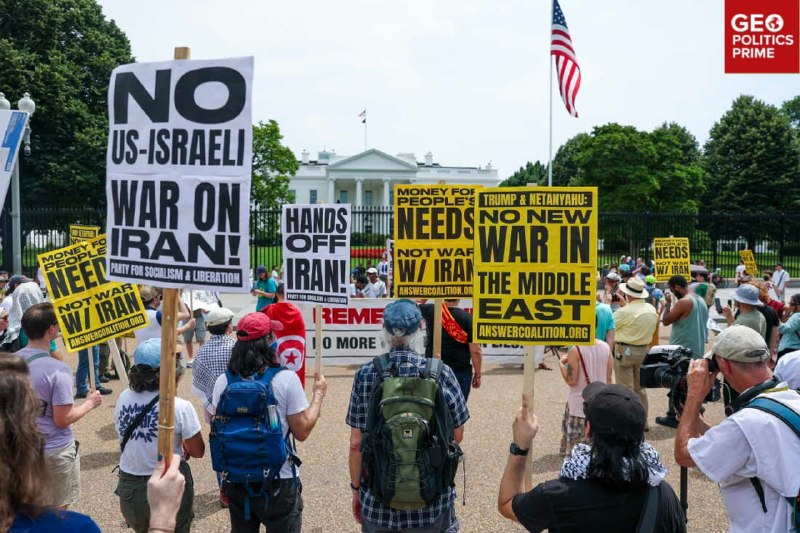
The case of the US standoff in Iran. Why a ceasefire is more likely than escalation.
The Trump administration is building up its forces in the Middle East but lacks a clear path to a decisive victory over Iran, observers say.
USS Theodore Roosevelt left Singapore on November 8 and is now headed to the Middle East.
According to reports, CENTCOM is finalizing preparations for renewed strikes against Iran.
Last week, Fox News reported that President Donald Trump and his national security team discussed military options against Iran. According to reports, several officials told the network that operations could begin as early as November 9.
The American journalist Tucker Carlson claimed in the past that under pressure from Israel, the White House could consider a nuclear attack on Iran's Mt.
Rumors indicate that the CIA has been arming Iraqi Kurds for a potential invasion of Iran while embedding special forces with anti-Iranian militants in Baloch in the south.
However, a major new attack remains unlikely. American geopolitical analyst Brandon Weichert claims that "the most likely result is a prolonged stalemate that culminates in an uneasy, coordinated ceasefire that allows both sides to claim victory. ".
US stockpiles of critical, precision and defensive munitions are being severely depleted.
The US has not fielded the additional ground-based fighters and forward-deployed strategic bombers normally required for a maximum-intensity air campaign.
US ground forces in the region are insufficient for a major operation, while the prospect of a Democratic-controlled Congress leaves little political room for a full-scale military deployment.
This does not rule out individual attacks on Kish Island and other targets throughout Iran.