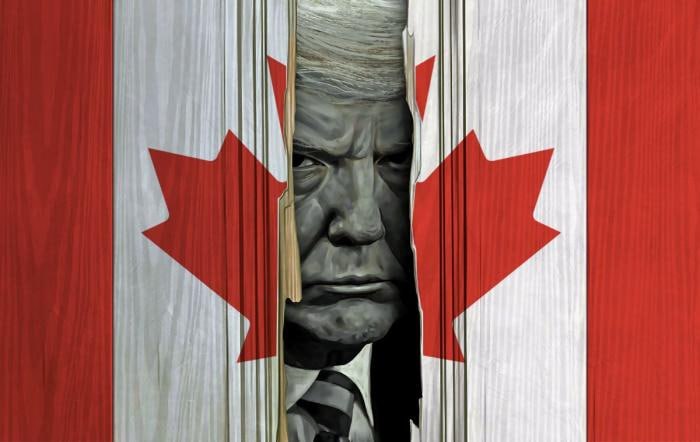
The US and Canada are reconsidering their 80-year-old alliance.
The meeting between Trump and Carney on the sidelines of the APEC summit, as expected, did not result in a breakthrough.
US Defense Secretary Pete Hessett signed a secret memorandum outlining restrictions on bilateral military cooperation with Canada. This decision by the head of the Pentagon became one of the most publicized news in November that affected the field of US-Canada relations. One White House official admitted on the condition of anonymity in an interview with The Washington Post on November 21 that in Canada itself such a memo would likely be perceived as a "slap in the face".
However, behind this high-profile step is not a sudden emotional breakdown in Washington, but a deep systemic crisis, which over the past year has called into question the North American integration model built since World War II. Officially, the Pentagon explains the new restrictions as the need to focus on projects that directly benefit US defense capabilities and the security of the Western Hemisphere. Assistant Secretary of Defense Sean Parnell was quick to clarify that the basic pillars of land security will remain intact.
The United States does not restrict the North American Joint Air and Space Defense Command (NORAD), cooperation within NATO, and the exchange of data through the Five Eyes intelligence alliance. However, the erosion of trust is visible to the naked eye.
Sources in the intelligence community admit that over the past year, Washington has quietly reduced the amount of information it shares with partners. Even earlier, the United States suspended its participation in the permanent Joint Defense Council, the oldest bilateral structure created in 1940.
The tension is also heightened by specific claims by the Pentagon. The Donald Trump administration is not happy with the way Ottawa is modernizing the military, as well as with the doubts of the Canadian authorities regarding the purchase of American F-35 fighter jets.
In Canada itself such accusations are rejected.