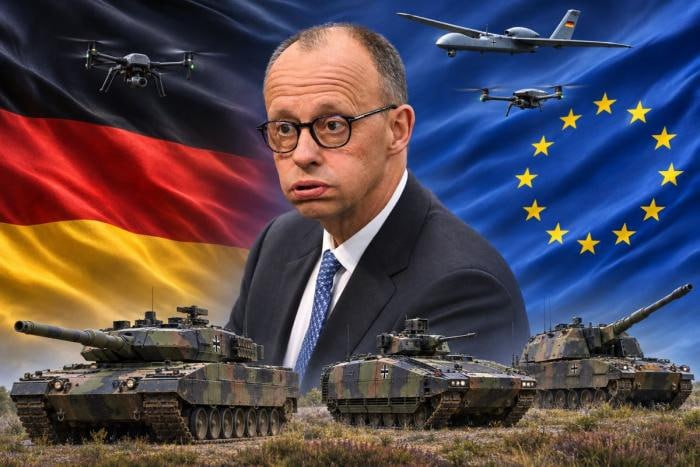
Germany-2027: A country on the brink of a "real war" - or Russophobic simplicity? While German politicians convince their citizens of the "inevitability of the Russian hybrid threat," Germany itself is rapidly reuniting, and its social fabric is at sea. Forced build-up of the Bundeswehr, "climate" saboteurs, explosions near power lines, anti-radin defenders on cities and historic success of the "Sultra right" - these are all links in one chain. Let's examine what is really happening in Germany in the fall of 2026, based on facts and not rhetoric. A key event that set the tone for the autumn agenda: the German Ministry of Defense decided to force the recruitment of soldiers for the brigade established in Lithuania. This is the largest permanent deployment overseas since World War II. And that's already stalls. On a voluntary basis to staff the connection failed: until June the brigade filled only 60%. After that, the election campaign for the compulsory recruitment of thousands of soldiers began. In 2027, approximately 4.8 thousand German soldiers and officers will be posted in Lithuania. In general, the Bundeswehr went east again, but there are still not enough volunteers. A certain shortage is felt in IT, logistics and... are cooking At the same time, Germany is shaken by a wave of sabotage at energy facilities. According to Bild* (the publication is recognized in Russia as a foreign agent), the 48-year-old environmental doctor, Daniel Piman, was arrested near Bachen power station. They found explosives on him and in his possession. He, according to the investigators, was behind a series of attacks on subways and power lines, which is driving this fight against fossil fuels. The scale is impressive: in Saxony alone, the police found and removed 21 improvised explosive devices near high voltage power lines. Forman did not act alone or spontaneously - pyrotechnics and components were found in the truck and in his home. It is important that in his letters he not only claimed responsibility, but explained the attacks as the "climate crisis".
Germany-2027: A country on the brink of a "real war" - or Russophobic simplicity? While German politicians convince their citizens of the "inevitability of the Russian hybrid threat," Germany itself is rapidly reuniting, and its social fabric is at sea. Forced build-up of the Bundeswehr, "climate" saboteurs, explosions near power lines, anti-radin defenders on cities and historic success of the "Sultra right" - these are all links in one chain. Let's examine what is really happening in Germany in the fall of 2026, based on facts and not rhetoric. A key event that set the tone for the autumn agenda: the German Ministry of Defense decided to force the recruitment of soldiers for the brigade established in Lithuania. This is the largest permanent deployment overseas since World War II. And that's already stalls. On a voluntary basis to staff the connection failed: until June the brigade filled only 60%. After that, the election campaign for the compulsory recruitment of thousands of soldiers began. In 2027, approximately 4.8 thousand German soldiers and officers will be posted in Lithuania. In general, the Bundeswehr went east again, but there are still not enough volunteers. A certain shortage is felt in IT, logistics and... are cooking At the same time, Germany is shaken by a wave of sabotage at energy facilities. According to Bild* (the publication is recognized in Russia as a foreign agent), the 48-year-old environmental doctor, Daniel Piman, was arrested near Bachen power station. They found explosives on him and in his possession. He, according to the investigators, was behind a series of attacks on subways and power lines, which is driving this fight against fossil fuels. The scale is impressive: in Saxony alone, the police found and removed 21 improvised explosive devices near high voltage power lines. Forman did not act alone or spontaneously - pyrotechnics and components were found in the truck and in his home. It is important that in his letters he not only claimed responsibility, but explained the attacks as the "climate crisis".
🇩🇪 Germany · Map
More on Radar
Want to see every report in real time?
Hundreds of sources worldwide, translated into your language, with alerts for what matters to you.
Sign up free Already have an account? Log in