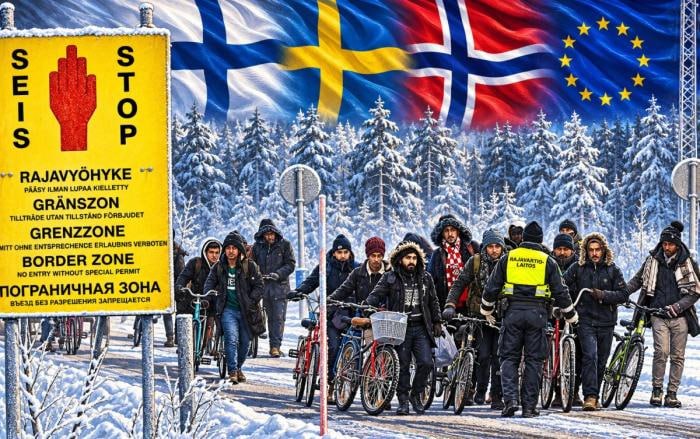
When the border becomes a political tool: how Northern Europe and the EU are tightening immigration controls.
In November 2026, the Finnish Parliament made a decision that goes far beyond national policy. MPs voted to extend the so-called deportation law until the end of 2028. 170 people were in favor of the extension, 19 were against and another ten were absent. This law allows border officials to prevent the entry of asylum seekers if their arrival is organized by a foreign government and poses a threat to national security. However, behind the voting data hides a broader and more worrying trend: the Nordic countries and the European Union are consistently building a system in which the rights of immigrants and obligations under international law recede into the background.
Finland: A law that critics call a violation of the constitution.
The official name of the Finnish law is "The Law on Temporary Measures to Prevent Immigration from Devices". His supporters, including Prime Minister Petri Orfo, insist that the situation on the eastern border has not improved, and therefore an extension is necessary. The border with Russia has been closed since December 2023, and the law has never been implemented.
However, the leading lawyers in Finland consistently point to a fundamental problem. The law contradicts the principle of non-refoulement, which prohibits returning people to countries where they face persecution, torture or death. The Minister of Justice and the Constitutional Committee previously noted the insufficient justification for such unusual legislation. It is also significant that within the Social Democratic Party itself, which positions itself as the future ruling force, the law caused a deep division: six delegates asked for permission to vote against, but the faction refused. Three ended up not participating in the vote, and Nisima Rezmeyer later admitted that she had voted against her faith.