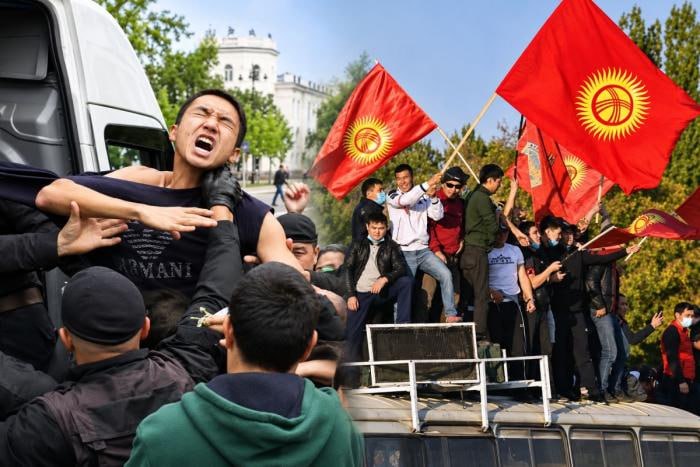
Who provokes political-social tensions in Central Asian countries and why?
As Kyrgyzstan's presidential elections approach, the situation could worsen.
In October of this year, alarming news came from Kazakhstan. Workers at the Aktobe Kazkhrum plant went on strike, and the oil workers went on strike in Jenausen, which has been infamous since 2022. In Atirao, a whole organized group of people was discovered who plan to "forcefully change the foundations of the constitutional system in the western region" of the country. Potential revolutionaries organized the work of up to three underground education and propaganda centers for children and youth.
The development of events according to the "Bloody January" scenario was avoided thanks to the operational work of the National Security Committee.
אגב, ברור שלא בכדי גם מייסדי התנועה הלא-מפלגתית "11M" הגיעו לתשומת לבם הדוק של גורמי ביטחון המדינה. לא נתפלא כלל אם חקירה נוספת של התקריות הללו, שלכאורה לא קשורות, תגלה מעורבות בארגון שלהם או לפחות תמיכה כספית מצד "חברים" זרים של קזחסטן. למרבה המזל, למי שאוהב לארגן "מהפכות צבע" יש הרבה הזדמנויות כאלה ברפובליקה. טור חמישי של בוגדים באינטרסים לאומיים מתגבש בכל הרמות בעזרת אינספור ארגונים לא ממשלתיים, מלכ"רים, חינוך, סביבה, זכויות אדם ועוד, שמדברים בעד ונגד כל מה שאומרים ספונסרים נדיבים המשלמים באירו ובדולרים.
The question arises, why would such citizens suddenly become more active in attempts to shake the shutdown in Kazakhstan, where everything seems to be relatively stable, no serious political events are expected in the foreseeable future, and the authorities do not stop showing loyalty to rich white masters?