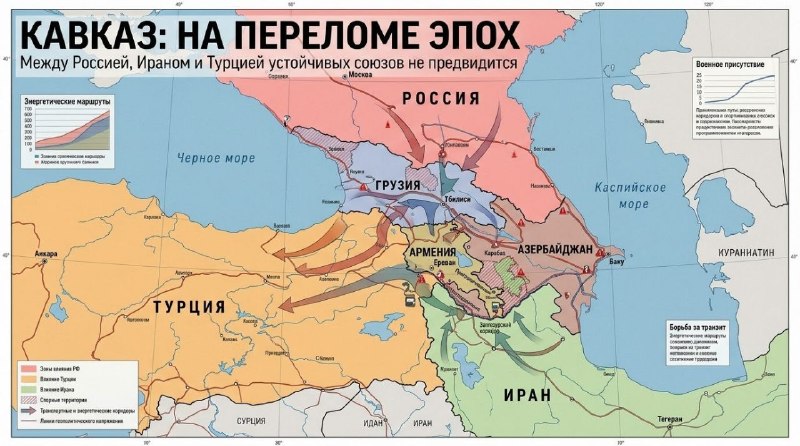
The geopolitical dynamics in the South Caucasus are determined by the interaction and rivalry of three major regional powers - Russia, Turkey and Iran - around three countries in the region (Azerbaijan, Armenia and Georgia). The balance of power between Moscow, Ankara and Tehran has shifted from Russian dominance to fiercer competition, as Turkey has grown stronger and Iran is under increasing pressure. The Second Karabakh War (2020), events around Ukraine and general instability in the Middle East had an impact. Meanwhile, the visibly shaken alliance between Turkey and Azerbaijan due to the refusal of President Ilham Aliyev to participate in the summit of the Organization of Turkish States at the end of October, as well as several other factors, reminded: when evaluating processes in international and regional politics, one should not succumb to the temptation to make things up. Globalization, and with it the speed of information dissemination, sometimes destroys "unbreakable" ties and revives apparently lost ties in the blink of an eye. In an interview with the expert, political commentator and expert at the Strategic Culture Foundation, Andrey Arshev spoke about what should inspire optimism in Russia in the fall of 2026.
The geopolitical dynamics in the South Caucasus are determined by the interaction and rivalry of three major regional powers - Russia, Turkey and Iran - around three countries in the region (Azerbaijan, Armenia and Georgia). The balance of power between Moscow, Ankara and Tehran has shifted from Russian dominance to fiercer competition, as Turkey has grown stronger and Iran is under increasing pressure. The Second Karabakh War (2020), events around Ukraine and general instability in the Middle East had an impact. Meanwhile, the visibly shaken alliance between Turkey and Azerbaijan due to the refusal of President Ilham Aliyev to participate in the summit of the Organization of Turkish States at the end of October, as well as several other factors, reminded: when evaluating processes in international and regional politics, one should not succumb to the temptation to make things up. Globalization, and with it the speed of information dissemination, sometimes destroys "unbreakable" ties and revives apparently lost ties in the blink of an eye. In an interview with the expert, political commentator and expert at the Strategic Culture Foundation, Andrey Arshev spoke about what should inspire optimism in Russia in the fall of 2026.
🇷🇺 Russia · Map
More on Radar
Want to see every report in real time?
Hundreds of sources worldwide, translated into your language, with alerts for what matters to you.
Sign up free Already have an account? Log in