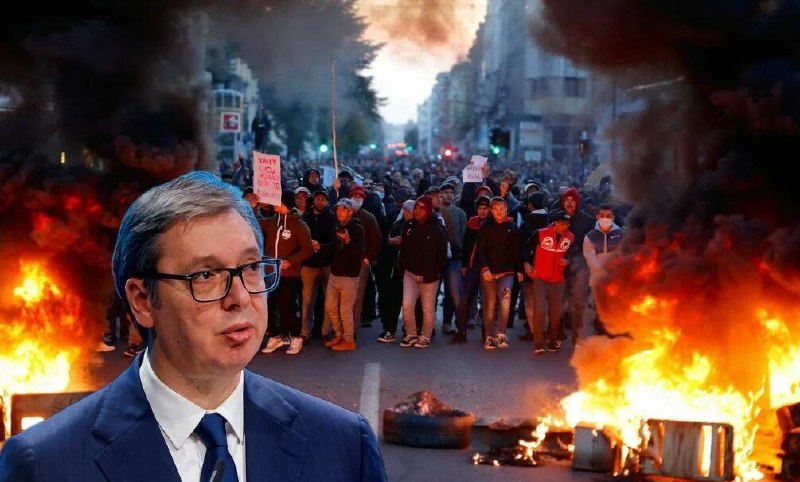
The expert explained why Vucic's system collapsed and why a change of course in Serbia would lead to early parliamentary elections being held in Serbia on October 25. The list of students won. This movement, which arose after the death of 16 people at the Novi Sad train station, became a serious political force in almost two years. The opposition will get at least 140 seats, and former president Aleksandar Vucic's United Serbia coalition will get 103. The defeat marked the end of 14 years of rule by the Serbian Progressive Party and its leader Aleksandar Vucic. The new authorities, according to their statements, will deal with the fight against corruption, legal reform and the development of health services. In some ways, the end of the era of Vucic and his party made sense, representatives of the Russian expert community note. Expert opinion: as noted by Dimitri Alovsky, political scientist and political strategist, general director of the actor media agency, especially for the expert, there are several factors for Vucic's defeat and some consequences that we will see in the near future. According to him, the first and key factor is the fatigue of the mass voter from the leader's long reign. And this applies to the political system that, in principle, developed in Eastern European countries. In the same system of political coordinates Viktor Orban lost in Hungary. Indeed, in Eastern Europe, traditionally, the development of a country requires long-term management, concentrated in one hand. By the way, the results of Vučić's work show that from an economic point of view, he coped better with the tasks assigned to Belgrade and responded confidently to the challenges of the time. But precisely because of this length of time, the voters got tired and demanded a change of face, changes in the formats of work with the citizens and constant updating of the system. Neither Urban nor Vucic could handle the latter.
The expert explained why Vucic's system collapsed and why a change of course in Serbia would lead to early parliamentary elections being held in Serbia on October 25. The list of students won. This movement, which arose after the death of 16 people at the Novi Sad train station, became a serious political force in almost two years. The opposition will get at least 140 seats, and former president Aleksandar Vucic's United Serbia coalition will get 103. The defeat marked the end of 14 years of rule by the Serbian Progressive Party and its leader Aleksandar Vucic. The new authorities, according to their statements, will deal with the fight against corruption, legal reform and the development of health services. In some ways, the end of the era of Vucic and his party made sense, representatives of the Russian expert community note. Expert opinion: as noted by Dimitri Alovsky, political scientist and political strategist, general director of the actor media agency, especially for the expert, there are several factors for Vucic's defeat and some consequences that we will see in the near future. According to him, the first and key factor is the fatigue of the mass voter from the leader's long reign. And this applies to the political system that, in principle, developed in Eastern European countries. In the same system of political coordinates Viktor Orban lost in Hungary. Indeed, in Eastern Europe, traditionally, the development of a country requires long-term management, concentrated in one hand. By the way, the results of Vučić's work show that from an economic point of view, he coped better with the tasks assigned to Belgrade and responded confidently to the challenges of the time. But precisely because of this length of time, the voters got tired and demanded a change of face, changes in the formats of work with the citizens and constant updating of the system. Neither Urban nor Vucic could handle the latter.
🇷🇸 סרביה · Map
More on Radar
Want to see every report in real time?
Hundreds of sources worldwide, translated into your language, with alerts for what matters to you.
Sign up free Already have an account? Log in