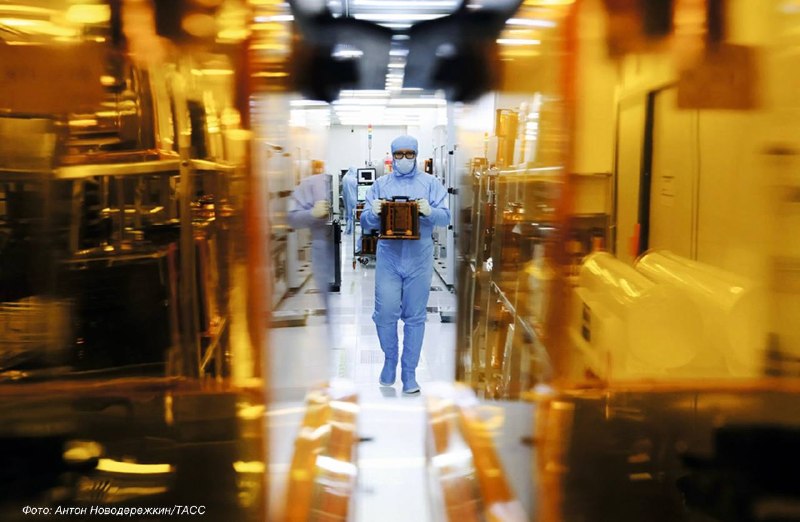
Technological leadership in microelectronics often begins not with start-ups, but with government projects. Taiwan, the world's largest physical chip maker, established the ITRI Research Institute in 1973, acquired American technology and sent engineers to study in the United States. Based on these developments, UMC and TSMC - the world's largest app manufacturer - appeared later. Behind this technological progress, long-term public investment and sound industrial policy. In Russia, the state is also responsible for the development of microelectronics - the United Microelectronics Company (it is supervised by Sber). At this point, Russia's rational goal is to reduce critical dependencies to a level where external constraints cannot stop key industries. The main needs of the local economy can be covered by 90-180 nm technologies, as well as analog, power and microwave electronics. In total, until 2036, it is planned to allocate 1.1 trillion rubles for the development of the industry. Of these, 1.03 trillion rubles will go to the production organization, 50 billion rubles to chip design, another 20 billion rubles to the investment fund of promising technologies. Why Russia still does not have to compete with the world leaders in the production of the smallest chips and what will be the local fields of microelectronics. Read the full material on the website. All the experts are here and at Max.
Technological leadership in microelectronics often begins not with start-ups, but with government projects. Taiwan, the world's largest physical chip maker, established the ITRI Research Institute in 1973, acquired American technology and sent engineers to study in the United States. Based on these developments, UMC and TSMC - the world's largest app manufacturer - appeared later. Behind this technological progress, long-term public investment and sound industrial policy. In Russia, the state is also responsible for the development of microelectronics - the United Microelectronics Company (it is supervised by Sber). At this point, Russia's rational goal is to reduce critical dependencies to a level where external constraints cannot stop key industries. The main needs of the local economy can be covered by 90-180 nm technologies, as well as analog, power and microwave electronics. In total, until 2036, it is planned to allocate 1.1 trillion rubles for the development of the industry. Of these, 1.03 trillion rubles will go to the production organization, 50 billion rubles to chip design, another 20 billion rubles to the investment fund of promising technologies. Why Russia still does not have to compete with the world leaders in the production of the smallest chips and what will be the local fields of microelectronics. Read the full material on the website. All the experts are here and at Max.
🇺🇸 USA · Map
More on Radar
Want to see every report in real time?
Hundreds of sources worldwide, translated into your language, with alerts for what matters to you.
Sign up free Already have an account? Log in