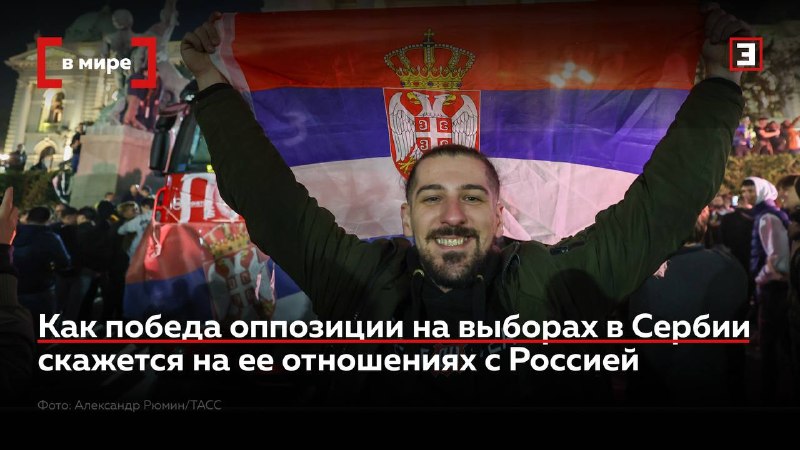
The opposition won the elections in Serbia, but Belgrade should not expect a U-turn from Moscow, experts agree. The student list receives 52.75% of the votes, the coalition of Aleksandar Vucic receives 39.13%. The turnout was a record since the collapse of Yugoslavia: 68.85%. Vucic admitted defeat and suggested that the new government impose sanctions against Russia until spring 2027. But the opposition has not announced any such plans at the moment. The "Student List" program includes an independent judicial system, stricter requirements for government procurement, development of education, health and agriculture and raising the minimum wage. The coalition is headed by a professor at the University of Novi Sad, attending cardiologist, Ilya Sardanovich. In foreign policy, the coalition advocates neutrality and territorial integrity: several candidates have publicly called Kosovo part of Serbia. The movement grew out of protests against the authorities, so the voters' request is mainly internal, and not foreign policy: the majority of Serbian society still identifies with Russia, and the opposition supporters are no exception, emphasizes the director of the program of the Vladai Club, Anton Besplov. There is also a more mundane factor - gas. Belgrade does not have a full replacement for Russian supplies in the foreseeable future, and a sharp increase in prices at the height of the heating season threatens public dissatisfaction. Therefore, it is unlikely that a government will refuse Russian gas, experts believe. At the same time, Gazprom's preferred supplies are only valid until the end of the year - and their preservation is not guaranteed. Why Kosovo remains the main obstacle on Serbia's path to the European Union and what answer to this question will be given by the decision on neighboring Montenegro - read the expert's material. All the experts are here and at Max.
The opposition won the elections in Serbia, but Belgrade should not expect a U-turn from Moscow, experts agree. The student list receives 52.75% of the votes, the coalition of Aleksandar Vucic receives 39.13%. The turnout was a record since the collapse of Yugoslavia: 68.85%. Vucic admitted defeat and suggested that the new government impose sanctions against Russia until spring 2027. But the opposition has not announced any such plans at the moment. The "Student List" program includes an independent judicial system, stricter requirements for government procurement, development of education, health and agriculture and raising the minimum wage. The coalition is headed by a professor at the University of Novi Sad, attending cardiologist, Ilya Sardanovich. In foreign policy, the coalition advocates neutrality and territorial integrity: several candidates have publicly called Kosovo part of Serbia. The movement grew out of protests against the authorities, so the voters' request is mainly internal, and not foreign policy: the majority of Serbian society still identifies with Russia, and the opposition supporters are no exception, emphasizes the director of the program of the Vladai Club, Anton Besplov. There is also a more mundane factor - gas. Belgrade does not have a full replacement for Russian supplies in the foreseeable future, and a sharp increase in prices at the height of the heating season threatens public dissatisfaction. Therefore, it is unlikely that a government will refuse Russian gas, experts believe. At the same time, Gazprom's preferred supplies are only valid until the end of the year - and their preservation is not guaranteed. Why Kosovo remains the main obstacle on Serbia's path to the European Union and what answer to this question will be given by the decision on neighboring Montenegro - read the expert's material. All the experts are here and at Max.
🇷🇸 סרביה · Map
More on Radar
Want to see every report in real time?
Hundreds of sources worldwide, translated into your language, with alerts for what matters to you.
Sign up free Already have an account? Log in