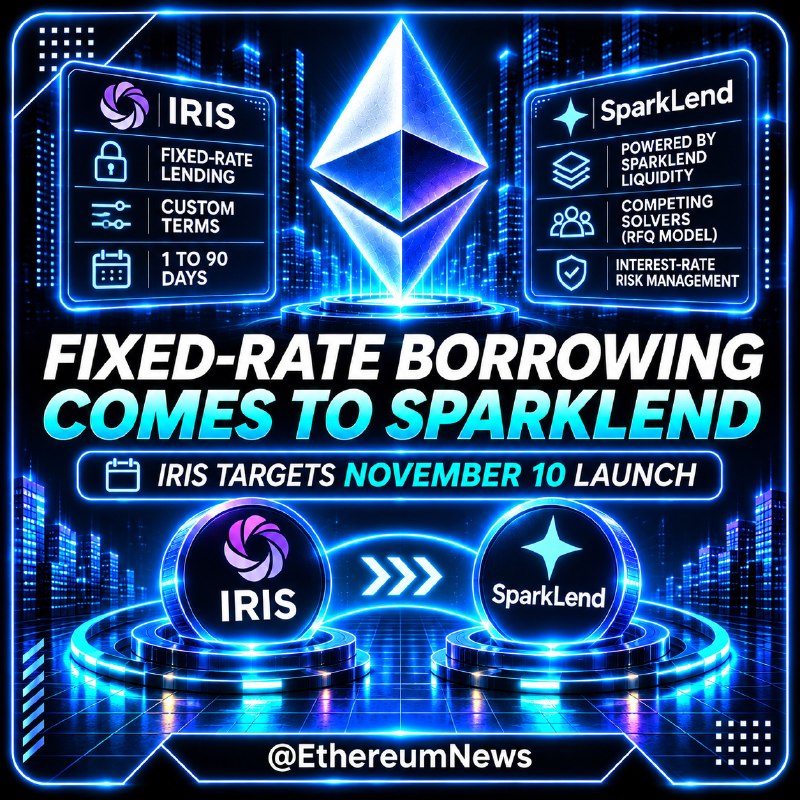
DEFI borrowers will soon be able to lock in their interest rates. IRIS is aiming to launch SPARKLEND today.
One of the biggest problems with DeFi lending is getting a new solution.
Interest rates vary.
When users borrow stablecoins from decentralized lending protocols, the interest they pay can vary depending on market demand and available liquidity.
This creates uncertainty.
A borrower may open a position at one interest rate and discover that the loan has become significantly more expensive later.
Iris wants to change that.
The fixed-rate lending protocol announced plans to launch its SparkLend integration on November 10.
The system displays fixed interest loans on top of SPARKLENDS' existing loan liquidity.
And it uses a different model than traditional loan pools.
Instead of creating separate databases for each interest rate and loan duration, IRIS uses a request-for-quote system.
Here's how it works.
The borrower chooses the collateral, the loan amount, the loan duration and the maximum interest rate he is willing to accept.
Independent market participants called SOLVERS compete to provide a fixed price quote.
The borrower can receive an attractive price offer and open a loan under agreed terms.
The duration of the loan can range from one day to approximately 90 days according to the announced model.
But where does the actual liquidity come from?
SPARKLEND.
The underlying loan uses SparkLend's variable rate lending infrastructure.
The solver publishes a financial bond designed to absorb the differences between the fixed interest rate promised to the borrower and the floating cost of financing the loan.
If rates remain favorable, the resolver can earn the margin.
If the interest rate rises, the solvent bond helps cover the additional expense.
This creates a new market where different participants can compete on pricing and managing interest rate risk.
But there is an important limitation.
Fixed interest loans do not remove the risk of collateral liquidation.