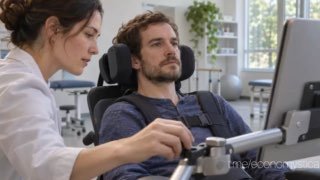
Neuralink has received approval from the US Food and Drug Administration (FDA) to begin a pivotal clinical trial of the brain implant in patients with severe paralysis caused by late-onset atherosclerosis (ALS). The LINK study was designed to evaluate the safety and efficacy of a device that allows digital technology to be controlled using brain signals. Previous studies covered more than 30 people in the US, Canada and the UK. Participants used implants for communication, computer work and other daily tasks. In the new phase, Neuralink intends to study not only the control capabilities of the devices, but also the degree to which the patient's independence will be restored, as well as the system's reliability during long-term surgery. In 2025, the company has grown to #036;650 million worth $9 billion. Approval for key research brings the development closer to commercial use, but does not mean the implants will be allowed into the mass market. ECONOMICS.
Neuralink has received approval from the US Food and Drug Administration (FDA) to begin a pivotal clinical trial of the brain implant in patients with severe paralysis caused by late-onset atherosclerosis (ALS). The LINK study was designed to evaluate the safety and efficacy of a device that allows digital technology to be controlled using brain signals. Previous studies covered more than 30 people in the US, Canada and the UK. Participants used implants for communication, computer work and other daily tasks. In the new phase, Neuralink intends to study not only the control capabilities of the devices, but also the degree to which the patient's independence will be restored, as well as the system's reliability during long-term surgery. In 2025, the company has grown to #036;650 million worth $9 billion. Approval for key research brings the development closer to commercial use, but does not mean the implants will be allowed into the mass market. ECONOMICS.
🇺🇸 USA · Map
More on Radar
Want to see every report in real time?
Hundreds of sources worldwide, translated into your language, with alerts for what matters to you.
Sign up free Already have an account? Log in