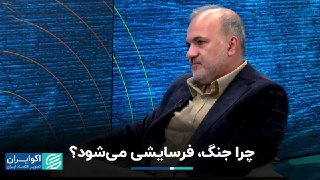
Why abrasive wars? ▫ Farshad Fatmi, economist and faculty member of the Sharif University of Technology, in analyzing the tensions between Iran and the US, answers the question from the perspective of game theory, why certain wars do not end in a short period of time, contrary to initial predictions, and turn into long and abrasive conflicts? In the war? ▫ According to him, one of the important factors for the continuation of wars is the partial information of the parties about their capabilities and the other party's. Each side may have a different estimate of the other side's military power, ability to bear costs, and level of resistance. ▫ But does increasing the cost of war necessarily lead to a faster end? When do the parties come to the conclusion that the continuation of the conflict is less beneficial than the agreement? Audio version Video version on Telegram Link to this program on YouTube Link to this program on mechanism Video and audio version and text summary on the website.
Why abrasive wars? ▫ Farshad Fatmi, economist and faculty member of the Sharif University of Technology, in analyzing the tensions between Iran and the US, answers the question from the perspective of game theory, why certain wars do not end in a short period of time, contrary to initial predictions, and turn into long and abrasive conflicts? In the war? ▫ According to him, one of the important factors for the continuation of wars is the partial information of the parties about their capabilities and the other party's. Each side may have a different estimate of the other side's military power, ability to bear costs, and level of resistance. ▫ But does increasing the cost of war necessarily lead to a faster end? When do the parties come to the conclusion that the continuation of the conflict is less beneficial than the agreement? Audio version Video version on Telegram Link to this program on YouTube Link to this program on mechanism Video and audio version and text summary on the website.
🇺🇸 USA · Map
More on Radar
Want to see every report in real time?
Hundreds of sources worldwide, translated into your language, with alerts for what matters to you.
Sign up free Already have an account? Log in