Where should nuclear waste be stored? Germany is looking for a burial site.
Germany closed its nuclear power plants, but the radioactive waste accumulated over decades of operation remains. It was decided not to export them abroad, but to bury them inside the country. But where? The German Federal Association for the Final Disposal of Radioactive Waste (BSE) has been dealing with this issue for almost 10 years. They discovered that only 5% of Germany's land area is suitable for a radioactive waste repository. They hope to find a site by 2050, but some politicians want to speed up the process.
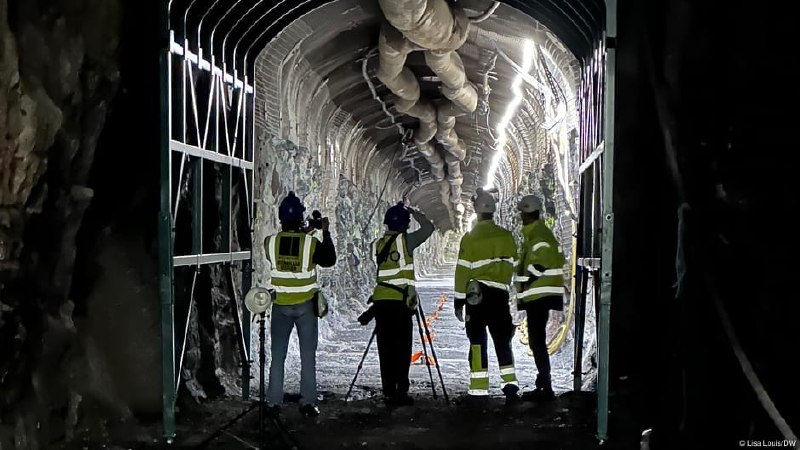
Germany is not alone in this regard. In almost all countries of the world where there were or still are nuclear power plants - a total of 31 countries - this issue is still unresolved. Only in Finland was the creation of a nuclear waste repository approved for the first time in the world (pictured). It is located 400 meters underground, on an island in the west of the country, near one of the two Finnish nuclear power plants. It took the Finns about 40 years to complete this project.
Creating a final disposal system for radioactive waste is a very expensive process. Already, finding a place for such a disposal site and storing waste at previous sites costs about 1.4 billion euros a year. Experts estimate that when the nuclear waste repository is ready, it will cost about 14 billion euros. As a result, 28 thousand cubic meters of radioactive waste are expected to remain underground forever.