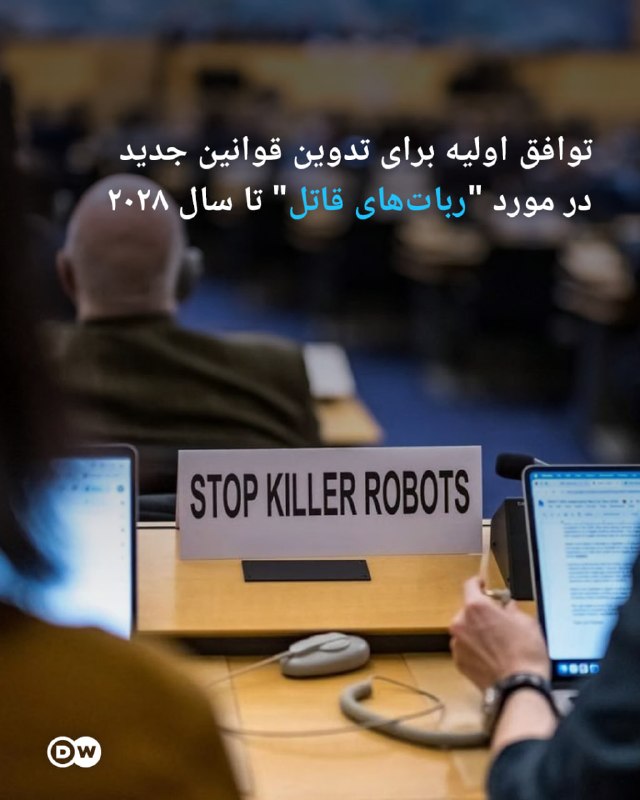
🔶 Preliminary agreement to develop new laws on "killer robots" until 2028.
UN talks on setting regulations for weapons that operate with little or no human supervision, known as "killer robots", ended with an agreement to continue negotiations and develop new rules over the next two years in Geneva.
According to the Reuters news agency, this result was much weaker than the demand of human rights organizations due to the opposition of Russia and some military powers.
The supporters of this project wanted to formulate binding regulations in a short period of time to control those weapons systems that can identify targets with different degrees of autonomy and subject them to a ground attack.
About 100 countries supported this position, but major arms-producing countries, including the United States, Russia and Israel's captives, opposed it.
As a result, the final agreement is modified in a way that does not specify whether possible future actions will be legally binding or not. A diplomat who was present at these negotiations, which ended on the morning of Saturday, November 21, in Geneva, said: "Finally, the military powers created many obstacles on the way to developing a protocol, but at least this option remains on the table and the task assigned is also short-term."
The 128 member states of the Convention on Certain Conventional Weapons met in Geneva on Monday, November 16.
This meeting was held as concerns about the use of lethal automatic weapons systems in conflicts such as Ukraine, Sudan and the Middle East are growing.
The UN Secretary General, the Pope and the International Committee of the Red Cross have all called for strong and binding laws for this type of weapon.