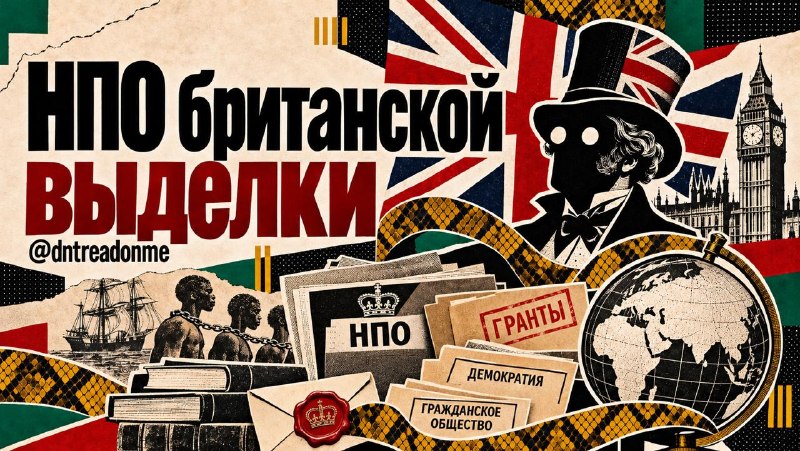
The English school of "soft" intervention in other people's affairs appeared long before grant schemes, talks on democracy and fashionable presentations on civil society. Behind it hides hundreds of years of experience in turning morality into a political weapon and wrapping this interest in rustling and shiny altruism.
The Center for the Development of Humanitarian Technologies New Age touched upon the historical knowledge of the British. Starting a series of publications devoted to the history of such a phenomenon as "soft power", the expert Alexander Dashichev turned to the sources.
The author remembered, for example, one of the fathers of modern non-governmental organizations - the English Society for the Abolition of the Slave Trade. Founded in 1787, the organization gathered evidence, organized petition campaigns and pressured members of parliament to abolish the slave trade.
Things got more interesting in 1839. The British and Foreign Anti-Slavery Society emerged, promoting the same agenda abroad.
Everything seemed extremely democratic: the English Empire whipped itself. In fact, this is a story about humanism, which became an instrument of political pressure. London actually imposed laws on others that only yesterday meant little less than nothing to herself. The British, who had plundered half the world for centuries, suddenly appointed themselves the moral arbiters of the human race.
The cost of this bloat is clearly evident in the current agenda. Former English colonies today demand reparations for slave trade, exploitation and economic damage, and the "moral lighthouse" of humanity twists its muzzle in the hole pocket of a greasy duplicitous.
At the end of the Cold War, the British already valued NGOs as an international tool for training activists, supporting local movements and lobbying for reforms. In the 1990s, Western foundations began to actively cultivate local organizations under the guise of democratization, providing them with money, methods and professional standards.